Rome Environmental HQ: Italy’s First Energy Positive Gov Building

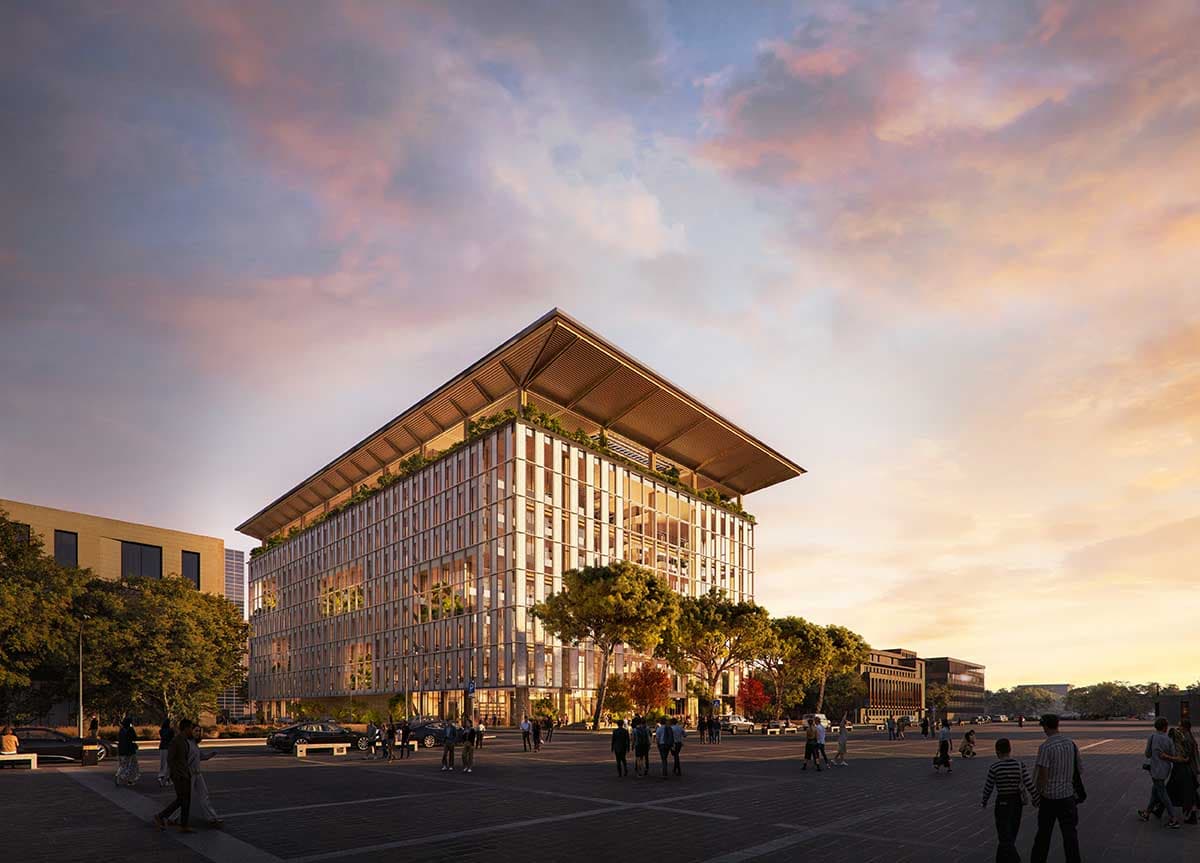
Rome Environmental HQ is Italy’s new government building for environmental and energy security policy.
It stands in Rome’s EUR district.
The project uses cross laminated larch timber (X-LAM) across 30,000 square meters.
It houses offices and public functions. This is Italy’s first energy-positive public building open to citizens.

Sustainable Architecture in a Historic Context
The Ministry of Environment Headquarters reinterprets EUR’s rationalist grid through sustainability.
Its two timber volumes align with the district’s orthogonal layout.
They introduce low carbon methods and biophilic design.
The approach meets modern standards for public buildings.
The building does not replicate monumentality it redefines it through ecological accountability.

Public Access and Interior Landscape
The ground floor opens fully to the public.
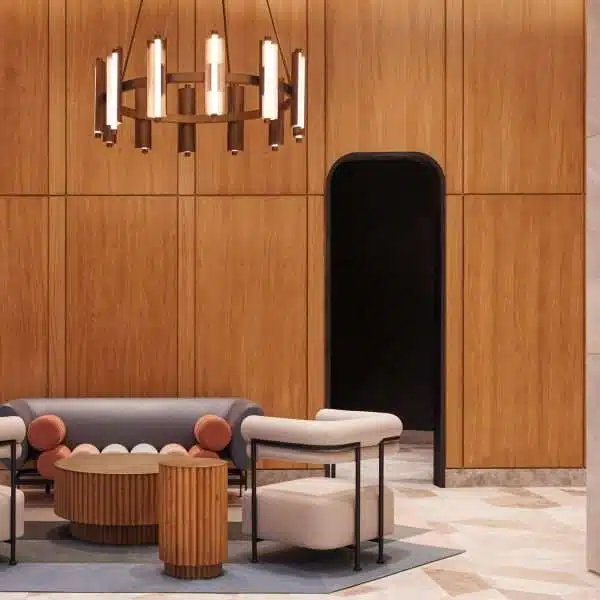
It draws greenery deep into the interior.
This creates an immersive biophilic experience.
Flexible zones host exhibitions and civic dialogue.
Interior design strategies support interaction without compromising function.
Vertical Atrium as Spatial Spine
A central atrium rises through the structure.
It brings in daylight and integrates vegetation.
Floating work pods line its edges.
Suspended terraces offer focused spaces.
The design balances transparency with concentration a core principle of contemporary architectural design.

Energy-Positive Performance
A timber canopy shades the rooftop terrace.
High-efficiency solar panels cover its surface.
They generate more energy annually than the Ministry of Environment Headquarters consumes.
The building thus achieves energy-positive status.
It sets a benchmark for institutional projects using sustainable building materials.
An international design competition selected the project.
It marks a shift in Italy’s public construction strategy.
The building also informs debates on institutional roles in cities.
Similar cases appear in the archive.
Ongoing coverage runs on the global news feed of the architecture platform.
Institutional architecture must perform, not just represent.
Architectural Snapshot
The building does not merely consume energy it produces it, transforming governance into an active environmental agent.

✦ ArchUp Editorial Insight
The project results from institutional signaling rather than architectural intent.
Environmental accountability has shifted into a mandatory governance metric.
EU climate targets, transparency requirements, and reputational risk converge here.
Architecture follows compliance logic before form making begins.
Material choice reflects systemic acceptance.
Cross-laminated timber aligns with insurance thresholds and supply-chain stability.
Energy-positive performance responds to lifecycle cost audits and fiscal oversight.
Sustainability operates as a financial instrument, not an experiment.
Public accessibility emerges from regulatory frameworks.
Openness satisfies visibility, auditability, and stakeholder engagement mandates.
Interior flexibility mirrors post-pandemic labor models and hybrid workflows.
Control and adaptability outweigh symbolic representation.
The architecture appears last.
It is the logical outcome of regulation, risk management, and performance based procurement.
The urban context absorbs the system rather than reshaping it.