Architecture and the Sacred: When Modernity Swallows the Geography of the Soul


How can major cities reconcile their historic mausoleums without sacrificing identity or falling into the trap of “dead museums”?
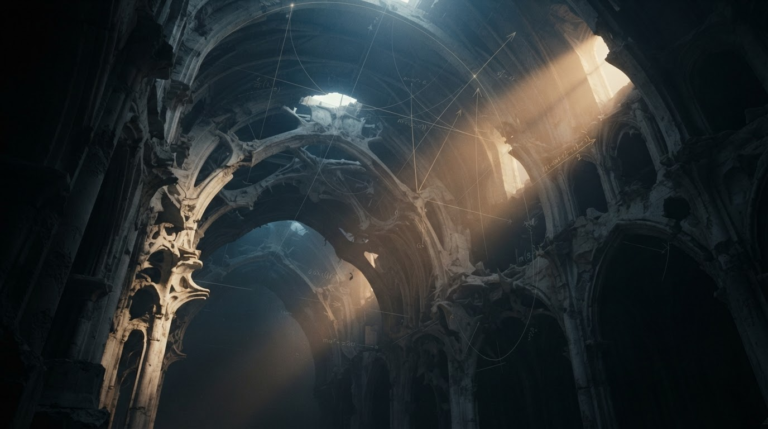
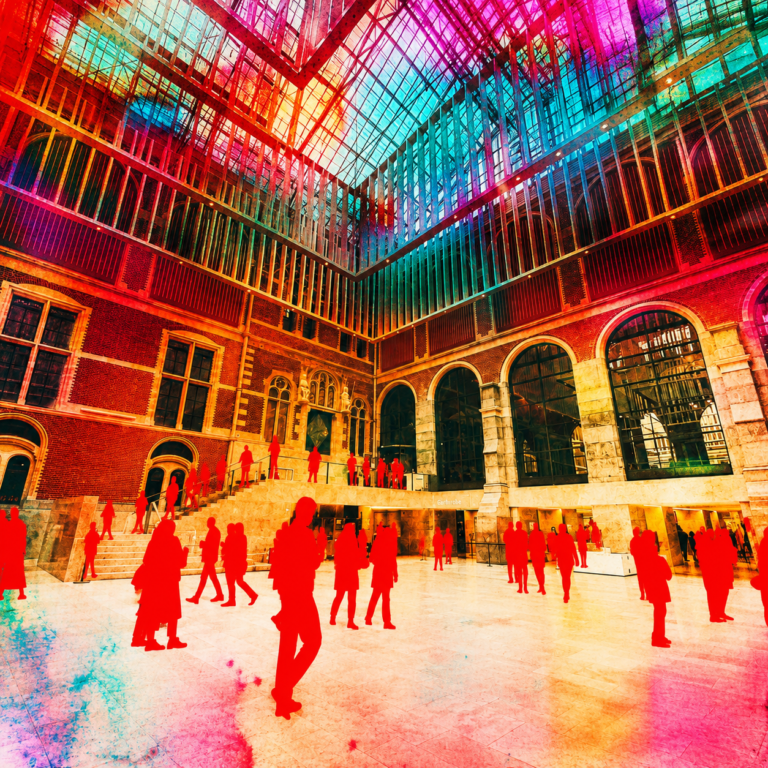
Contemporary cities awaken today to a sharp visual paradox; towering glass skyscrapers consume the horizon, while directly adjacent lie historic religious complexes and mausoleums besieged by noise and congestion. This abrasive contact between the “kinetic sacred” and the “rapid secular” presents urban planning with a genuine dilemma. Mausoleums and funerary complexes were never merely silent witnesses to the past; historically, they formed the solid core around which markets, schools, and public squares crystallized—a phenomenon clearly manifested in ancient Islamic and Indian metropolises. Today, the planning question is no longer confined to how to restore these ancient walls, but rather how to re-weave “sacred space” into the lifeblood of urban existence without relegating it to a cold tourist coma that strips away its vital connection to daily human life.
Reproducing Space: The Geography of the Soul in the Face of Concrete Expansion
In a deep study led by researchers Daniel Goh and Peter van der Veer, it becomes clear that the relationship between sacred space and the built environment in Asian cities remains a virgin territory requiring extensive deconstruction. Cities are not merely concrete vessels for habitation, but dynamic theaters where spiritual identities and collective rituals take shape. This dimension integrates with the concepts put forward by Marian Burchardt regarding the “assemblage of urban religious diversity,” where he argues that sacred places are not static entities, but spaces that constantly redefine themselves through intersections with local laws, infrastructure, and social actors. Consequently, the project of revitalizing funerary and religious complexes becomes an entry point to rescue the city from visual and social fragmentation.
Religious Urbanism: When Space Resists the Alienation of the Contemporary City
Researcher Orlando Woods introduces the concept of “religious urbanism” to explain how spiritual groups resort to reshaping secular spaces and reclaiming them for devotional purposes, as a natural reaction to the constraints and narrow spaces of congested cities. This spatial resistance intersects with the propositions of Nermin Nasser regarding “cultural continuity and the meaning of place” in historic Islamic metropolises. She asserts that success in reshaping these centers depends on understanding that every passing day gives the place a renewed meaning emerging from the live interaction between the building, daily activities, and rituals. Transforming a mausoleum into a merely isolated architectural object constitutes a functional assassination, whereas vitality lies in its existence as a living heritage pulsing with movement.
The Organic Core: Traditional Planning Principles as a Sustainable Roadmap
When looking at the physical structures of historic cities, architecture remains inseparable from human value. In this context, Mahdi Jamalinezhad and his colleagues point out that the foundational principles of the Islamic city, such as justice, human dignity, and environmental protection, offer a framework that is simultaneously rigid and flexible for development processes. Analyzing the physical structure of cities, Kaveh Ghasemi and his team demonstrate that religious spaces such as mosques, husseiniyehs, and funerary complexes were historically centralized at the heart of the metropolis, forming a direct organic link with other urban elements like markets and squares. This original model was destroyed by the right-of-way alignments and straight streets of the modernist era, necessitating the reinvention of this organic connection through contemporary methods.
This heritage-led regeneration approach fundamentally operates along two primary dimensions: first, the comprehensive restoration of damaged assets to unlock their future developmental potential; and second, the systematic integration of the historic built environment with contemporary urban life in a manner that updates functionality without distorting historical identity.
From Hafsiya to Darb al-Ahmar: The Intelligence of Hybrid Finance and Local Empowerment
Global experiences demonstrate that top-down development dictated solely by real estate calculations ultimately fails. In this regard, Mohamed Said El-Basha reviews the “Hafsiya” project in Tunis and the “Darb al-Ahmar” project in Cairo as prominent models of heritage-led urban regeneration. These interventions revived traditional urban fabric while improving the positive living conditions of the residents, culminating in the Hafsiya project winning the Aga Khan Award for Architecture twice. This success builds upon what Stephan de Beer demonstrates regarding “faith-based action and urban regeneration,” calling for a transition from direct aid to comprehensive institutional change by investing the “socio-spiritual capital” of local communities, which possesses five key pillars: moral authority, property ownership, human resources, internal networks, and a sense of mission.
Financial ingenuity manifests here in invoking heritage patterns such as “charitable endowment funds” that merge development with maintenance. The Hafsiya project utilized a cross-subsidy mechanism to finance low-income social housing through the revenue generated from selling commercial and residential units at market rates, attracting private investment and doubling property values without displacing residents. In the Darb al-Ahmar project, an upward partnership documenting households financially and socially led to a loan repayment rate of 99.6 percent, proving that community empowerment remains the primary guarantor for successful engineering projects.
Challenges of the Urban Chokepoint: The Conflict of Density and the Stripped Identity Crisis
Reshaping processes face challenges such as deteriorating infrastructure. Researchers Swati Chandan and Ashwini Kumar highlight Indian pilgrimage cities like Varanasi and Puri, where population density rises to critical levels ranging between 400 and 500 people per hectare, alongside temporary floating millions that put intense pressure on facilities. This physical pressure runs parallel to warnings from Jian Wang regarding the danger of displacing original inhabitants. He emphasizes that displacing local communities under the pretext of heritage preservation destroys living culture and turns history into a decontextualized consumer commodity serving the real estate market. Additionally, legal challenges emerge, as discussed by Marian Burchardt in Canadian models, showing how strict zoning regulations that appear neutral on the surface can choke sacred spaces and lead to legal disputes that disrupt the maintenance of these urban centers.
Harmonious Governance: The Three Principles for Sustainable Living Heritage
To ensure these religious communities do not turn into dead glass facades, Jian Wang proposes three governing principles inspired by the Chinese experience: authenticity, integrity, and continuity of function, explicitly declaring that preserving historic fabric should not be confused with real estate development agendas seeking quick profit. This approach aligns with the vision of Nermin Nasser, who encapsulates the sustainability of historic centers within three institutional factors: administrative support, sustainable financing mechanisms, and genuine community participation. Urban history demonstrates that ruling and endowing powers supported public welfare by investing in the city environment. This is the role that modern institutions must play today by drafting flexible legislation that recognizes the mausoleum and the sacred complex as a “living heritage” breathing through the lungs of the contemporary city, rather than a petrified artifact where approach is forbidden.
✦ ArchUp Editorial Insight
The friction between mausoleums and skyscrapers is less an aesthetic clash than a byproduct of capital velocity, land valuation models, and zoning regimes that privilege throughput over ritual continuity. As cities financialize land, sacred complexes shift from being urban anchors to spatial liabilities, constrained by setback rules, traffic engineering, and speculative pressures that reward vertical yield. Regulatory neutrality often masks an asymmetry: commercial development is streamlined, while religious use is encumbered by compliance burdens and noise, parking, and crowd-control constraints. Where heritage survives, it does so through alternative governance—endowments, cross-subsidies, and community-backed finance—that reinsert sacred space into everyday economic circuits. The resulting architecture—either isolated “museum” enclaves or re-integrated mixed-use fabrics—reveals the prevailing institutional logic. In this sense, the fate of the sacred is not a design problem but a referendum on how cities price memory, risk, and collective meaning.
References
Goh, Daniel P. S., and Peter van der Veer. “Introduction: The sacred and the urban in Asia.” International Sociology, 2016.
Burchardt, Marian. “Religion in urban assemblages: space, law, and power.” Religion, State and Society, 2019.
Woods, Orlando. “Religious urbanism in Singapore: Competition, commercialism and compromise in the search for space.” Social Compass, 2018.
De Beer, Stephan F. “Faith-based action and urban regeneration.” HTS Teologiese Studies / Theological Studies, 2018.
Jamalinezhad, Mahdi, Seyed Mohsen Talakesh, and Seyed Hossein Kamal Soltani. “Islamic Principles and Culture Applied to Improve Life Quality in Islamic Cities.” Procedia – Social and Behavioral Sciences, 2012.
Ghasemi, Kaveh, Mohammad Hamzenejad, and Ali Meshkini. “The livability of Iranian and Islamic cities considering the nature of traditional land uses in the city and the rules of their settlement.” Habitat International, 2019.
Nasser, Nermin. “Cultural Continuity and Meaning of Place: Sustaining Historic Cities of the Islamicate World.” Journal of Architectural Conservation, 2003.
Chandan, Swati, and Ashwini Kumar. “Challenges for urban conservation of core area in pilgrim cities of India.” Journal of Urban Management, 2019.
El-Basha, Mohamed Said. “Urban interventions in historic districts as an approach to upgrade the local communities.” HBRC Journal, 2021.
Jagrati, Singh, Atul Kumar, and Ila Gupta. “Spiritual Revitalization of Indian Cities through Heritage Conservation.” E3S Web of Conferences, 2020.
Wang, Jian. “Problems and solutions in the protection of historical urban areas.” Frontiers of Architectural Research, 2012.