Singapore Links Utility Shaft Design to Ground and Neighbouring Building Risks

Singapore’s Building and Construction Authority issued risk-based guidelines for utility shaft excavation on 19 October 2026. The framework considers ground conditions and nearby buildings when selecting earth-retaining systems, following incidents of ground loss and water ingress.
The joint BCA, ACES, IES and GeoSS circular covers investigation, monitoring and supervision. It applies to utility shafts requiring structural-plan approval and supplements existing statutory duties.
Implications for construction procurement
For clients and contractors, the practical question is when ground uncertainty enters the price. Treating investigation and temporary support as incidental items can leave bidders pricing different assumptions. A more explicit brief can make those assumptions visible before excavation begins, rather than during a dispute over additional work.
Architects coordinating sites with confined access also have a stake: the working area, temporary works and construction sequence compete for space with permanent design requirements. Early coordination can help expose those conflicts. The circular does not establish a market-wide cost increase or guarantee savings.
✦ ArchUp Editorial Insight
Infrastructure procurement divides a continuous physical process into separate appointments, prices and responsibilities. That division becomes consequential when the ground behaves differently from the assumptions used to prepare a tender. A utility connection may occupy little space on a masterplan, yet its construction requires decisions about access, temporary support, sequencing and the protection of neighbouring property. The architectural significance lies in bringing those decisions into the project brief before the permanent building appears to be resolved. For clients, a useful test is whether competing bids describe comparable investigations and monitoring commitments, rather than merely comparable finished assets. For designers, it is whether responsibility remains legible when specialist packages change hands. For contractors, it is whether the programme allows time to respond to observations instead of rewarding uninterrupted excavation regardless of conditions. These are procurement questions with spatial consequences. A small opening in the ground can therefore reveal how thoroughly a development has accounted for the city around it, including people and properties outside the construction contract.
Source: BCA / ACES / IES / GeoSS, Circular APPBCA-2026-23, “Risk-based Guidelines on ERSS Shafts for Utility Works”, 19 October 2026.
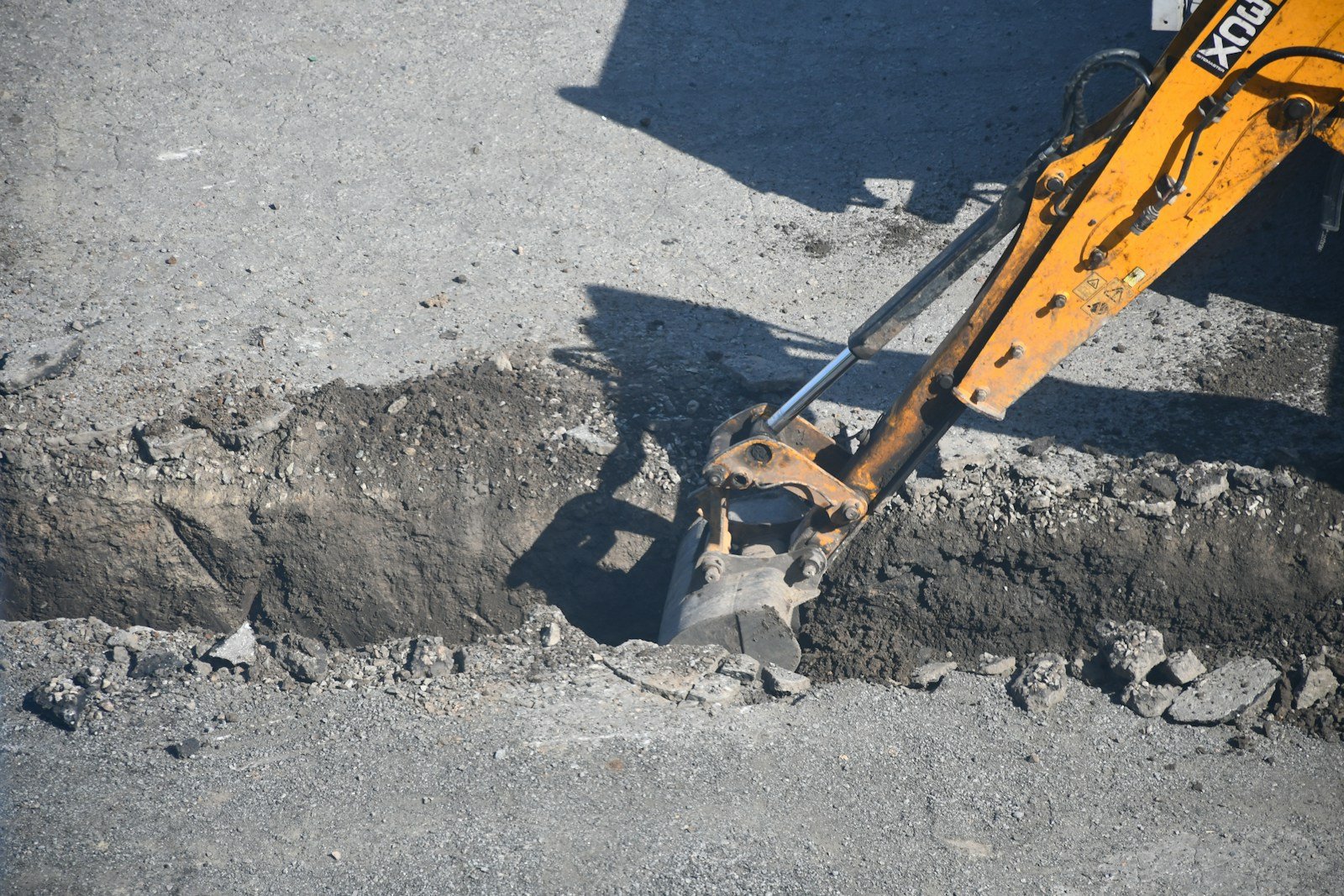
Cover: Excavator digging a road trench. Illustrative photograph; not a documented site from the Singapore circular. © Anna Kharkivska / Unsplash.