Small Laundry Room Design: Space-Saving Storage and Layout Ideas

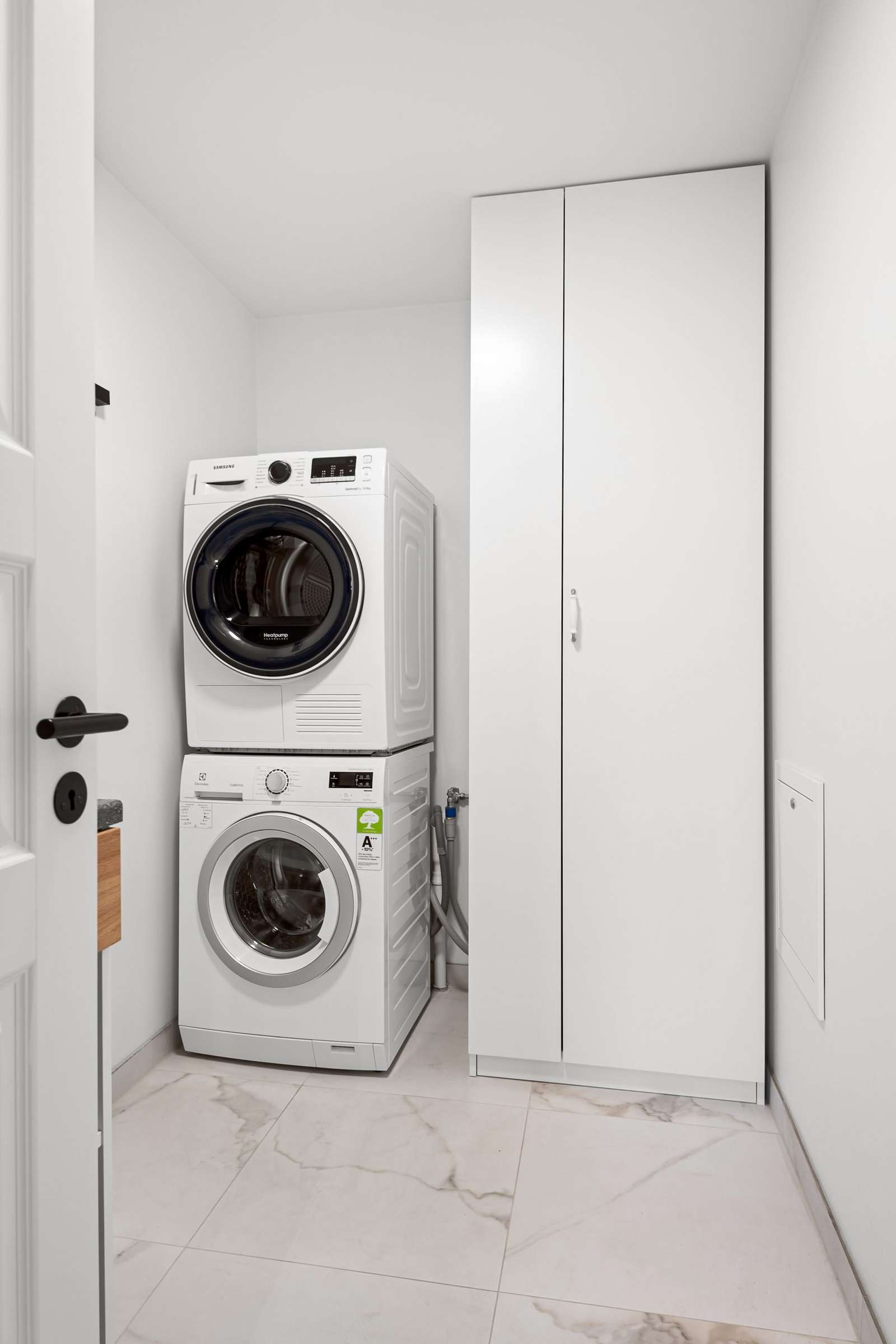
Efficient laundry room design in limited spaces prioritizes vertical storage and a clear workflow to maximize functionality. Utilizing narrow gaps for rolling carts and installing wall-mounted racks or folding surfaces reduces floor-level clutter. These strategies ensure a seamless transition between sorting, washing, and drying clothes.
Successful layouts maintain accessibility to essential utilities and ventilation while providing dedicated areas for folding and ironing. Incorporating integrated hampers and multi-functional surfaces allows compact service areas to perform effectively. Ultimately, thoughtful organization of everyday tasks ensures the space remains practical for maintenance and daily use.
Designing Small Laundry Rooms to Make the Most of Limited Space
A laundry room does not need to be large to work efficiently. In smaller spaces, good design depends on using vertical storage, making use of narrow gaps, reducing floor-level clutter, and maintaining clear circulation around the washer, dryer, storage, and ironing areas.
The goal is not simply to add as many cabinets as possible. A well-designed laundry room should support a clear workflow: sorting, washing, drying, folding or ironing, and storage. The closer and better organized these functions are, the more efficiently a compact space can perform.
Use the Space Between the Washer and Dryer
Narrow gaps between appliances, or between an appliance and the wall, are among the most commonly wasted spaces in a laundry room. A slim rolling cart can turn this gap into useful storage for detergent, stain removers, laundry bags, and small cleaning supplies.
Before selecting a cart, measure the available width, height, and depth carefully, leaving enough clearance for it to move easily. Storage should never obstruct appliance ventilation, electrical connections, water supply lines, or drainage points.

Use Vertical Storage Instead of Floor Space
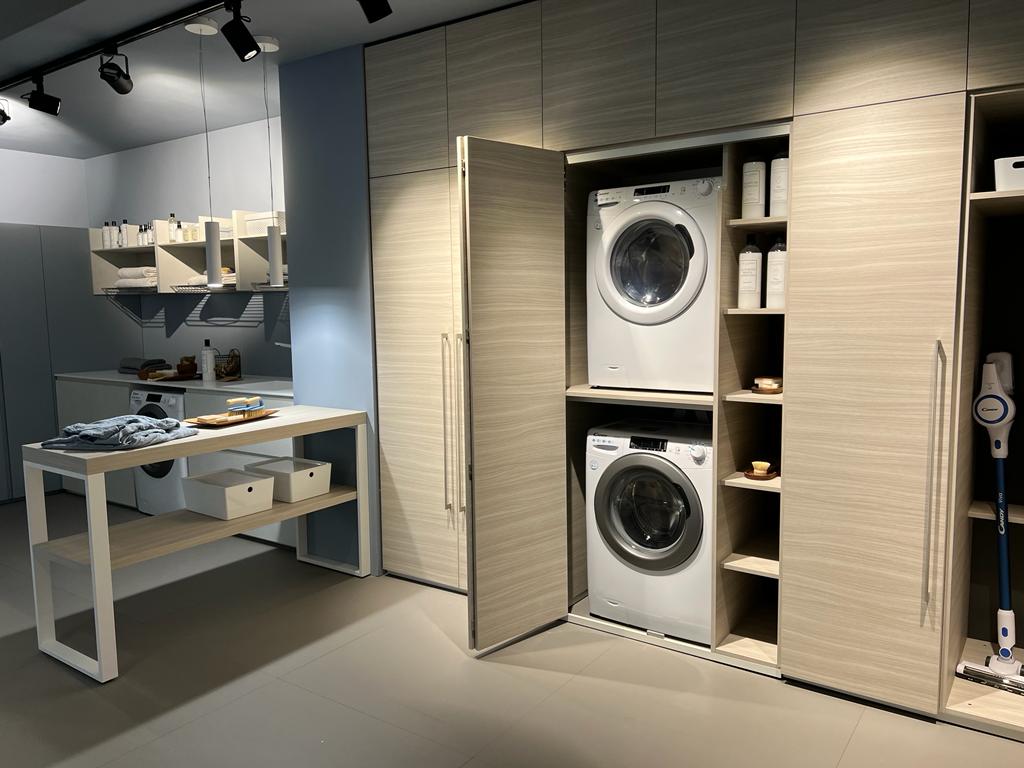
When floor area is limited, the walls become an important part of the storage system. Upper cabinets, shelves, rails, and hooks can accommodate laundry supplies and clothes waiting to be dried or ironed without occupying valuable circulation space.
Vertical storage should still be organized according to frequency of use. Everyday items should remain within easy reach, while higher shelves can accommodate less frequently used supplies. Heavy containers should generally be kept at accessible heights rather than stored overhead.
Add Space-Saving Hanging Rails
A compact hanging rail can perform several functions in a small laundry room, particularly for garments that need to move directly from washing to air-drying or ironing. It can be installed beneath an upper cabinet or along an otherwise unused section of wall.
Slim hangers, retractable rails, and folding systems can increase capacity without creating unnecessary visual clutter, particularly when the laundry area is connected to a kitchen, corridor, or another service space.
Store the Ironing Board Out of the Way
A conventional ironing board occupies considerable space relative to the amount of time it is actually used. It can instead be mounted behind a door, stored vertically on a wall, or integrated into a dedicated cabinet.
In very compact laundry rooms, a tabletop ironing board or fold-down ironing surface may be more practical than a full-size board. The principle is simple: an occasional-use item should not permanently consume valuable floor area.
Choose a Foldable Step Stool
Upper cabinets increase storage capacity but also create an accessibility issue. A small folding step stool provides safer access and can be stored inside a narrow gap when it is not required.
Ideally, its storage position should be considered during the design stage rather than after the room is completed. Efficient small spaces often depend on having a defined location for every frequently used object.
Install a Wall-Mounted Drying Rack
A foldable wall-mounted drying rack is useful where there is not enough room for a freestanding rack. It can be opened when required and folded back against the wall afterward, leaving the circulation area clear for most of the day.
Retractable clothes rails are another option. Whatever system is selected, adequate ventilation around the drying area is important to help manage moisture within the room.
Use Foldable or Integrated Laundry Baskets
Large laundry baskets can quickly obstruct a compact room. Foldable baskets can be stored when not in use, while integrated hampers can be incorporated directly into cabinetry.
For households that regularly separate laundry, dedicated compartments can also be provided for different loads. Giving baskets a defined location prevents clothing from accumulating around the room and keeps access to appliances and cabinets clear.
Include a Practical Work Surface
One element frequently overlooked in laundry room design is a surface for sorting and folding clothes. Where front-loading appliances are used and installation requirements permit, the area above the washer and dryer can potentially become a continuous countertop.
In narrower rooms, a fold-down work surface can provide the same function without permanently occupying circulation space. Keeping folding and sorting within the laundry area also reduces the need to move clothes into another room to complete the process.
Do Not Overlook Ventilation and Maintenance
Using every available centimeter does not mean filling every surface with cabinetry. Access to water connections, drainage, electrical points, and ventilation must remain available, while appliance clearances should follow the manufacturer’s installation requirements.
Laundry rooms are also exposed to water, humidity, and heat. Floors and finishes should therefore be easy to clean and appropriate for moisture-prone environments, with sufficient ventilation and adequate lighting around the main working areas.
Design Around the Laundry Workflow
A successful small laundry room is not necessarily the one with the most storage. It is the one that makes the complete laundry process easier. A narrow rolling cart, folding drying rack, countertop above the appliances, or well-organized vertical cabinet can substantially improve how a limited space performs.
Good laundry room design therefore begins by understanding everyday use and arranging washing, drying, storage, folding, and ironing around that sequence. The result is a compact service space that uses its available area efficiently without sacrificing circulation, accessibility, or maintenance.