When the Smart Building Becomes Dumber Than Old Brick

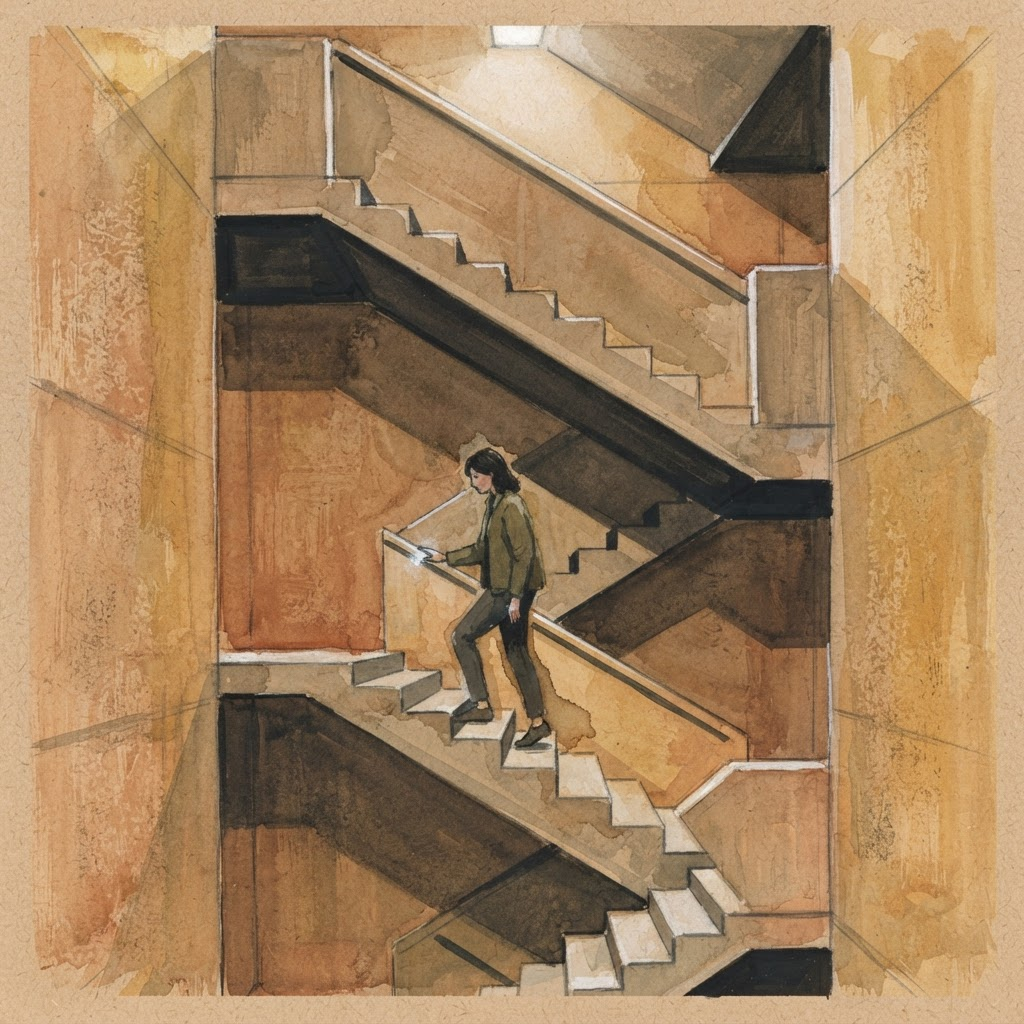
The building performed with quiet efficiency: elevators anticipated your destination before you pressed a button, ventilation systems recalibrated themselves according to occupancy, and lighting learned your daily rhythms and moved ahead of you. Everything was connected, everything communicated with everything else, and everything appeared to think. Then the connection dropped.
It was not a total outage at first — merely a fault in a remote server, a disruption in a software update, or a cyberattack that took only minutes to execute. But the consequences were immediate and unambiguous: the elevator stopped between floors, the ventilation system reverted to a crude emergency mode, and the biometric doors — designed never to open any other way — became immovable barriers. The most sophisticated building in the neighborhood was reduced, within hours, to a disabled concrete mass, while the old building next door — with its manual keys and operable windows — continued to function without complaint.
This is not a hypothetical scenario or an exaggerated catastrophe narrative. It is the practical conclusion that digital resilience research reaches when applied to the lived reality of smart buildings and smart cities: the greater the intelligence, the greater the fragility — unless resilience is designed with the same rigor applied to the structural frame itself.
When the Algorithm Becomes a Load-Bearing Wall
To understand the full depth of this problem, we need to set aside the appealing image that technology companies have constructed around the smart building — the image of a responsive, self-improving, learning entity. The real picture is considerably more complex: a smart building is, at its core, a network of interdependent systems relying on overlapping layers of software, communications infrastructure, and data. A failure in any single layer propagates with alarming speed through every layer that depends on it.
What systems engineers call the “single point of failure” — the component whose malfunction brings down the entire system — multiplies inside smart buildings in ways that many designers have not anticipated. The central server managing the Building Management System (BMS) functions, in practice, as a digital load-bearing wall: when it falls, the building fails functionally, even if it remains standing structurally.
This is precisely what the research of Adel and colleagues documented in their analysis of seven major global ICT failures between 2019 and 2024. The researchers found that centralized architectures constitute primary vulnerabilities, allowing even minor disturbances to escalate into comprehensive crises. The risk is not limited to cyberattacks — though those represent a genuine and growing threat — but extends to ordinary software errors, untested operational updates, and hardware failures in the physical machines that carry the software. In the context of buildings, this means that a single server room can disable hundreds of residential units or work environments accommodating thousands of people.
The deeper paradox is this: the smart building was designed to compensate for human limitation — distraction, forgetfulness, the slowness of manual decision-making — yet in the absence of deliberate digital resilience it produces a fragility far greater than anything human limitation ever generated. When a person forgets to open a window, they can open it later. When an algorithm stops, it does not forget — it disappears.
What Conventional Architectural Drawings Cannot See
When an architect designs a smart building, the drawings fill with floor plans, sections, elevations, and area schedules. But there is another map that is almost never drawn: the data flow diagram, the inter-system communication network, the map of potential fracture points. In the absence of this map, the architect builds a structurally sound wall on top of a digitally fragile foundation.
The research of Arsiani and Subriadi, in their systematic review of digital resilience literature, establishes that the concept does not mean simply returning to a prior state after a crisis. It means the capacity to adapt and grow in the face of digital disruptions. When this definition is applied to the world of architecture, it reveals that a building’s digital resilience means its ability to perform its essential functions — shelter, work, assembly — even in the absence of full digital connectivity, and to recover from disruptions without reproducing the crisis it has just survived.
This raises a foundational design question that rarely appears on project requirement lists: what happens to this building if its internet connection fails for twelve hours? Can its occupants open their doors? Do the emergency exits operate independently of network status? Do fire monitoring systems continue to function? In the majority of current smart buildings, the honest answers to these questions generate more concern than confidence.
But the problem extends well beyond the individual building. The smart city — understood as a network of buildings, infrastructure systems, and interconnected services — carries a compounded fragility, and demands an entirely different mode of thinking.
The City That Is Learning How to Collapse
In the smart city models that urban planners have embraced with considerable enthusiasm, data flows freely between water networks, power grids, transportation systems, and municipal services, while systems make decisions with near-autonomous authority: directing traffic, optimizing energy consumption, coordinating emergency response. This integration is precisely what makes a city “smart” in the technical sense — and it is also precisely what exposes it to modes of failure that traditional cities have never encountered.
When the city of Oakland, California, suffered a cyberattack in 2023 that compromised its interconnected municipal systems, the consequences did not stop at disabled websites or compromised employee data. Emergency systems failed, ambulance response times lengthened, and entire facilities were forced to close — because the city’s intelligence had made everything dependent on everything else. The painful irony was that neighborhoods that had retained partial legacy infrastructure — those that had not yet completed their digital transition — continued to function more effectively throughout the crisis.
Abdullahi and colleagues, in their study of digital orientation and organizational resilience, attribute this kind of systemic vulnerability to the absence of what they term dynamic capabilities in the areas of sensing, seizing, and transforming. In the context of urban planning, these three capabilities translate with clarity: sensing means the capacity to detect a digital disturbance before it becomes a physical crisis; seizing means the capacity to convert that detection into an immediate and effective response; and transforming means the capacity to restructure systems after a crisis in ways that make them more durable against the next disruption.
None of these three capabilities are built into conventional smart city maps. They are built into the design decisions that architects and urban planners make years before any system goes live: Is there an alternative communication pathway between buildings when the primary network fails? Do emergency functions operate independently of centralized connectivity? Do residents and users understand how to interact with the building when it goes blind?
An Architecture That Designs for Failure Before It Designs for Success
In software engineering, there is a discipline known as Chaos Engineering: the deliberate testing of systems by introducing artificial faults, in order to expose vulnerabilities before real crises discover them. Companies such as Netflix and Amazon deploy automated programs that randomly disable portions of their own infrastructure, precisely to observe how the remaining components respond. The result is systems of considerably greater durability, because they have been designed from the outset with full awareness of their own potential failure.
The research of Adel and colleagues recommends extending this logic to the ICT infrastructure of critical sectors, including urban and building infrastructure. Their specific recommendations include transitioning from centralized to decentralized architectures built on microservices, automating rollback from failed updates, and implementing security orchestration, automation, and response (SOAR) mechanisms. In the context of architecture and urban planning, however, these recommendations acquire tangible spatial and physical dimensions.
A decentralized architecture in a smart building means, concretely, that each floor or each unit retains a degree of functional autonomy — that the failure of the central management system does not bring every sub-system to a halt. This principle is not fundamentally different from the principle of distributed load-bearing in a multi-point structural frame. A structure that concentrates its entire load on a single column requires only that column’s removal to collapse. A digital network that routes all its data through a single server requires only a single failure event to paralyze the building completely.
From an architectural standpoint, this carries a significant implication: designing for digital resilience demands the spatial planning of the building itself. Distributed server rooms rather than a single centralized room. Backup power pathways that do not converge on a single node. Manual control interfaces running in parallel with smart systems — not as emergency fallbacks, but as permanent design principles. These are not technical details to be appended during the finishing stages of a project. They are spatial organization decisions that belong in the earliest drafts.
The Organizational Culture That Builds — or Dismantles — Digital Resilience
Even when a smart building is designed to meet every established standard of digital resilience, a layer of fragility remains that engineering alone cannot address — the human layer.
The research of Velyako and Musa establishes a clear relationship between an institution’s digital organizational culture and its digital capability, and between that capability and its organizational resilience and capacity for innovation. When this relationship is applied to institutions that manage smart buildings or digital urban infrastructure, it means something straightforward: the team that operates these systems — facilities managers, maintenance technicians, emergency coordinators — determines, through its culture, skills, and situational awareness, whether the resilience designed into the building will actually activate in a moment of crisis, or remain a notation on a drawing that no one knows how to read.
The research of Potrich and colleagues on organizational resilience strategies in the digital age adds that intellectual capital in all three of its dimensions — human, structural, and relational — ultimately determines an institution’s capacity to withstand and recover from disruption. In the context of a smart building, this means that investment in training people to manage digital crises is not less important than investment in the technical infrastructure itself. A building may possess the most sophisticated automated response systems available, but if the person responsible for it does not know how to intervene manually in a critical moment, those systems retain only limited practical value.
There is a deeper implication here that concerns architects directly: a building is not delivered when construction is complete. A smart building is delivered when those who will live and work inside it understand how to operate it — and how to operate it when it fails. Smart building commissioning programs, operational documentation, and user training are not premium additions in construction contracts. They are components of resilience design in the fullest meaning of the term.
When the Smart City Redefines Who Holds the Key
Digital resilience in architecture raises questions that are as political and social in character as they are technical.
When a private company holds exclusive access rights to an entire residential building management system — a model that has become common in many smart real estate developments — who actually holds the key? When that company decides to suspend its service, or suffers a cyberattack, or enters bankruptcy, who protects the building’s occupants? And who guarantees the continuity of the building’s essential functions regardless of what happens to the commercial relationship between residents and their technology vendor?
These are not abstract questions. In recent years, documented cases have emerged of building management systems that stopped functioning abruptly when their providers went out of business, leaving occupants facing doors that would not open and systems that no longer responded. While the tenants of those buildings were searching for emergency solutions, the architects who had designed those systems years earlier were entirely absent from the situation.
The research of Arsiani and Subriadi indicates that digital resilience at the individual and community level requires supportive policy frameworks and secure infrastructure — not individual skills alone. When translated into the language of urban planning, this means that digital resilience requirements must enter building codes and construction regulations in precisely the same way that fire safety requirements and structural integrity requirements already do. A smart city cannot be built on the premise that resilience is a commercial option while fragility is the default condition.
✦ ArchUp Editorial Insight
The article on digital resilience in smart buildings and cities presents itself as a technical warning, but the structural condition it describes is something this archive has encountered repeatedly at a different scale: the party who makes the design decision exits before the consequence materializes, while the party who absorbs the consequence had no seat at the table.— Paragraph break —Here, the developer who integrates a proprietary Building Management System into a residential tower exits at the point of sale; the technology vendor who writes the service terms exits at contract expiry or insolvency; and the architect who specified the biometric doors and centralized server room exits at handover — leaving occupants facing a building that has, in legal and operational terms, already been abandoned by everyone who shaped it.— Paragraph break —What the research of Arsiani and Subriadi identifies as a deficit of individual and institutional digital resilience is, more precisely, a deficit of accountability continuity: resilience was never designed into the building because no party with design authority was contractually required to remain present long enough to experience its absence.— Paragraph break —The deeper structural observation is that smart building certification systems — like the sustainability instruments this archive examined in Green FIFA — reward the claim of capability at the moment of completion, not the delivery of that capability across the operational life of the building, which means the incentive to design genuine resilience is systematically weaker than the incentive to document it.
Will the smart city remain, in the end, a city that belongs to those who own the server — or will it learn how to live when the server stops? And do those who draw its plans today understand that the space they are designing is never truly tested until the lights go out?
References
Arsiani, M.W., and Subriadi, A.P. “Digital Resilience as a Critical Factor in Navigating Digital Transformation: A Systematic Literature Review.” International Seminar on Intelligent Technology and Its Applications (ISITIA), 2025.
Adel, A., Alani, N., Jan, T., and Prasad, M. “A Review of Major ICT Failures and Recovery Strategies: Strengthening Digital Resilience.” Computers and Security, 2025.
Potrich, L.N., Selig, P.M., Matos, F., and Giugliani, E. “Organisational Resilience in the Digital Age: Management Strategies and Practices.” Contributions to Management Science, 2022.
Abdullahi, U., Mohamed, A.M., and Senasi, V. “Digital Orientation and Organizational Resilience: The Contingent Effect of Dynamic Capabilities.” Sustainable and Resilient Infrastructure, 2024.
Velyako, V., and Musa, S. “The Relationship Between Digital Organizational Culture, Digital Capability, Digital Innovation, Organizational Resilience, and Competitive Advantage.” Journal of the Knowledge Economy, 2023.
Khurana, I., Dutta, D.K., and Singh Ghura, A. “SMEs and Digital Transformation During a Crisis: The Emergence of Resilience as a Second-Order Dynamic Capability in an Entrepreneurial Ecosystem.” Journal of Business Research, 2022.