Sweetbird North Explores Revelation and Concealment in Façades

Dynamics of Massing and the Double-Skin Façade
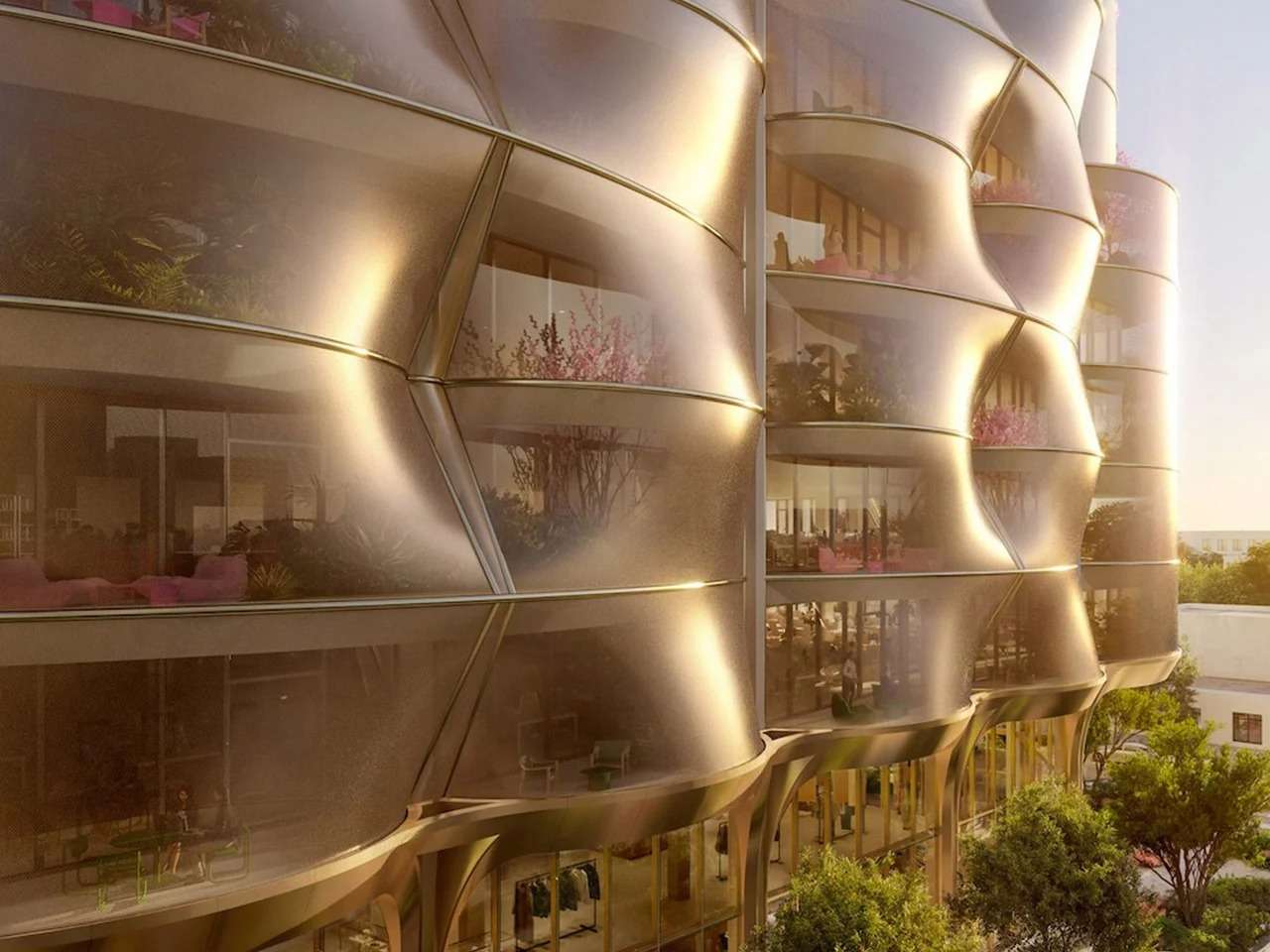
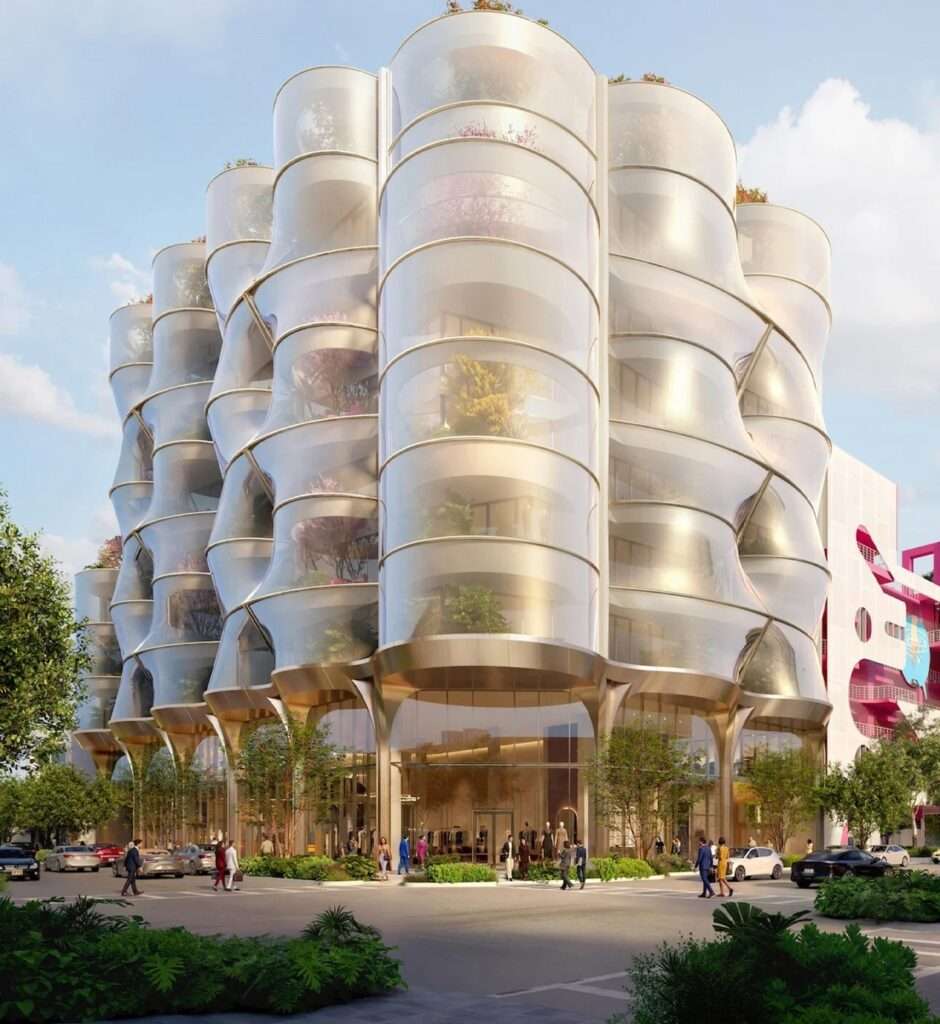
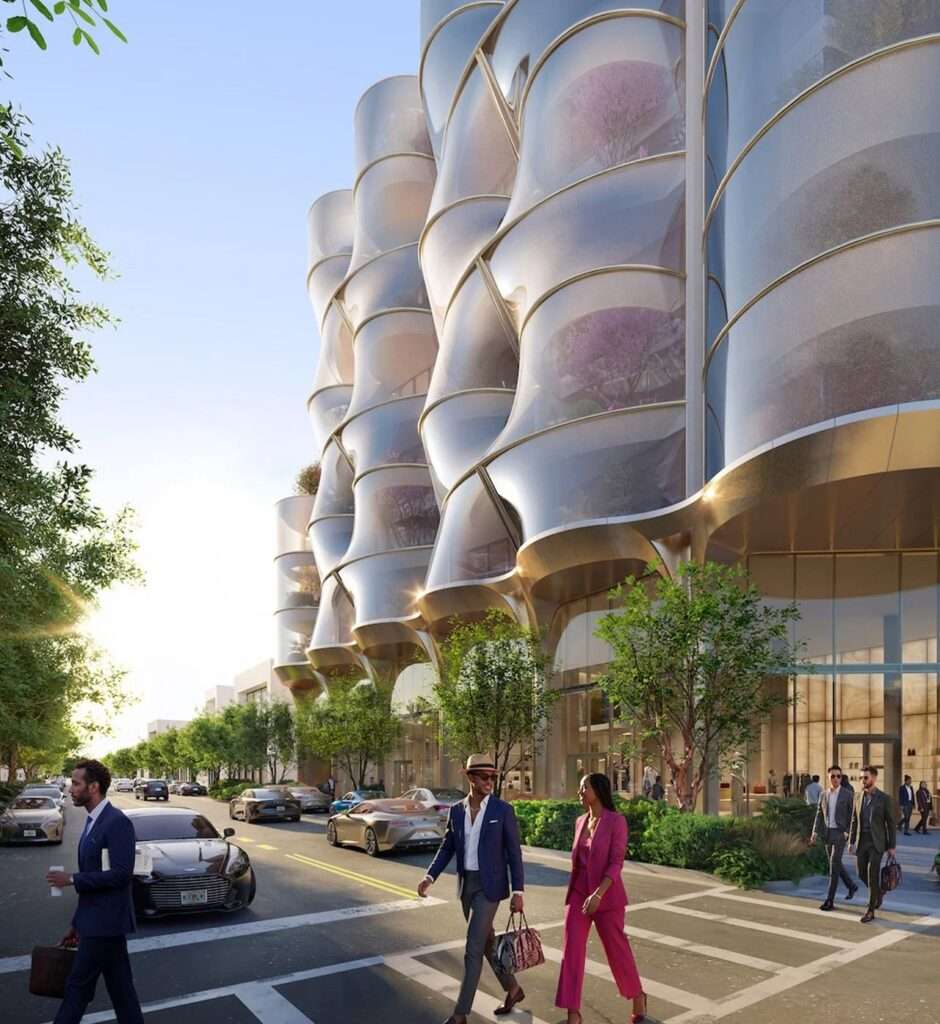
The external façade is conceived as a transformative structure within contemporary Architecture that does not settle into a single visual state; instead, it functions as a responsive layer that reacts to light and its surrounding environment. The stainless-steel envelope forms a surface network that interacts with changing solar angles, where the intersection of geometric rhythm and the daily movement of light generates a continuous contrast between shadow and reflection. As a result, the envelope shifts from a conventional enclosure element into a high-performance double-skin façade, revealing terraces and interior voids at certain moments while, at other times, redirecting daylight to reduce glare and provide a greater degree of privacy for the inner glazed façade.
The Scenography of Movement and Human Experience
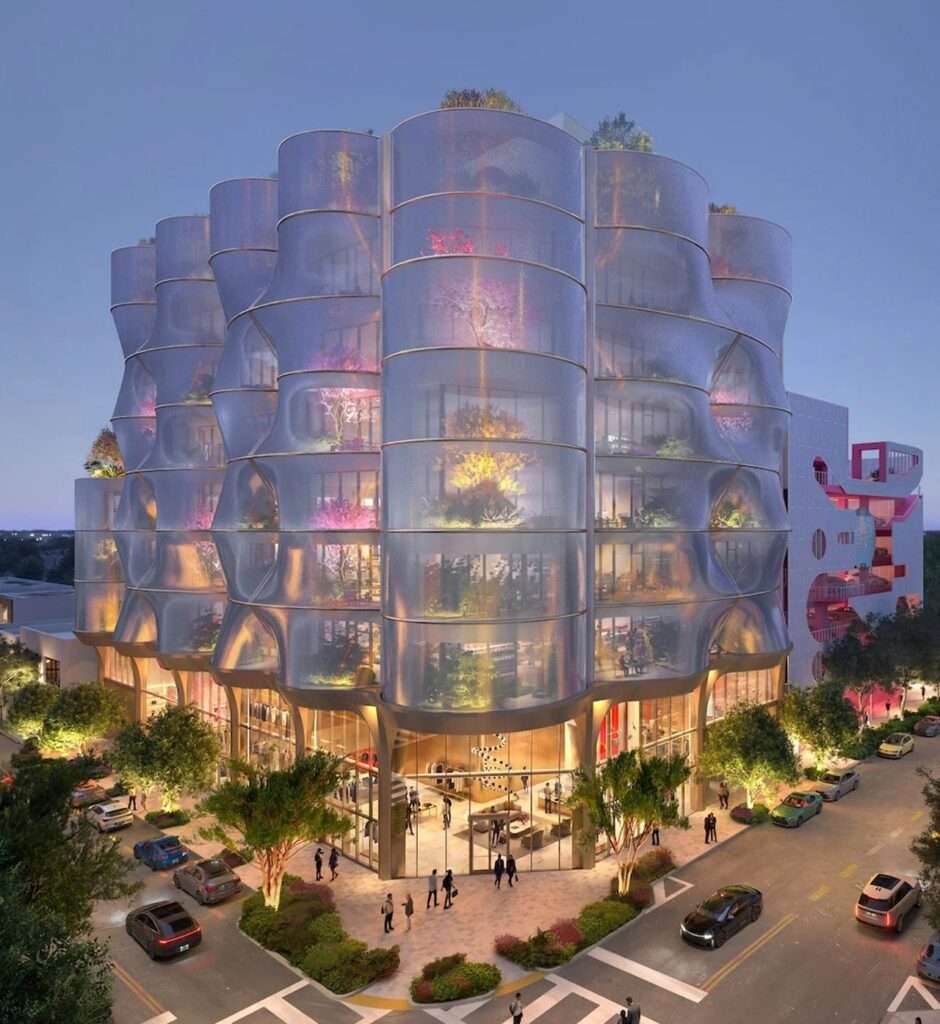
The spatial journey begins at the sidewalk level and gradually ascends through a vertical volume extending across eight mixed-use stories. The vertical structural grid, stretching from the ground plane to the roof, organizes visual movement and directs spatial perception, reinforcing a sense of vertical continuity. Within this sequence, the architectural setting intertwines with planted terraces and interior spaces, creating a transitional experience defined by the constant interchange between built form and nature, without requiring a rigid separation between the two. This relationship reflects broader discussions in architectural Design and spatial experience.
Functional Organization and Environmental Permeability
The programmatic arrangement is based on a clear vertical separation of uses. The podium levels (floors one and two) accommodate flexible commercial functions, while office spaces occupy levels three through eight, featuring open floor plates that can be reconfigured to meet the needs of creative and service-oriented industries. The integration of planted terraces throughout these levels enhances Interior Design quality by providing natural ventilation and daylight, reducing the intensity of the surrounding urban context and supporting a workplace environment that balances productivity with access to nature. Such strategies are increasingly associated with sustainable Construction approaches and evolving workplace environments.
Façade Scenography and Visual Depth
The mesh façade operates as a visual filter whose effect changes according to viewing angle and shifting daylight conditions throughout the day. Rather than being perceived as a fixed layer, it functions as a dynamic membrane that continuously reshapes the perception of the architectural mass. This variation generates a dual visual experience: a rapid reading from street level that reveals gradients of light and movement, and a deeper perception from greater distances that exposes the building’s internal layers. Between these two conditions, the façade oscillates between revelation and concealment, granting the massing a constantly evolving visual presence without relying on a static formal expression. Similar explorations can be found in numerous contemporary Projects and notable Buildings.
✦ ArchUp Editorial Insight
Sweetbird North is presented as a responsive vertical system in which the steel mesh envelope acts as an intermediary between solar movement and the gradation of interior programs, creating a double-skin façade that oscillates between opacity and transparency. The vertical organization across eight stories integrates planted terraces with mixed-use functions within a continuous spatial field shaped by light, redefining the relationship between massing and façade within an evolving urban context analytically associated with contemporary Cities, city-making, and architectural façade discourse. The project also contributes to ongoing Discussion regarding the role of responsive envelopes in contemporary architecture.
However, a critical reading reveals an overstatement in attributing an independent environmental role to the mesh envelope, as it is portrayed as a self-sufficient climatic mechanism without sufficient discussion of implementation costs or the long-term maintenance required to sustain its performance. In practice, such systems often privilege representational value over operational efficiency, particularly in urban projects shaped by symbolic economies rather than measurable material performance. Consequently, architectural meaning becomes more of a discursive construct than a verifiable environmental achievement. This perspective aligns with broader themes explored in Research, featured Top News, and the evolving Archive of architectural discourse.