The Plate That Fulfills Its Purpose by Breaking

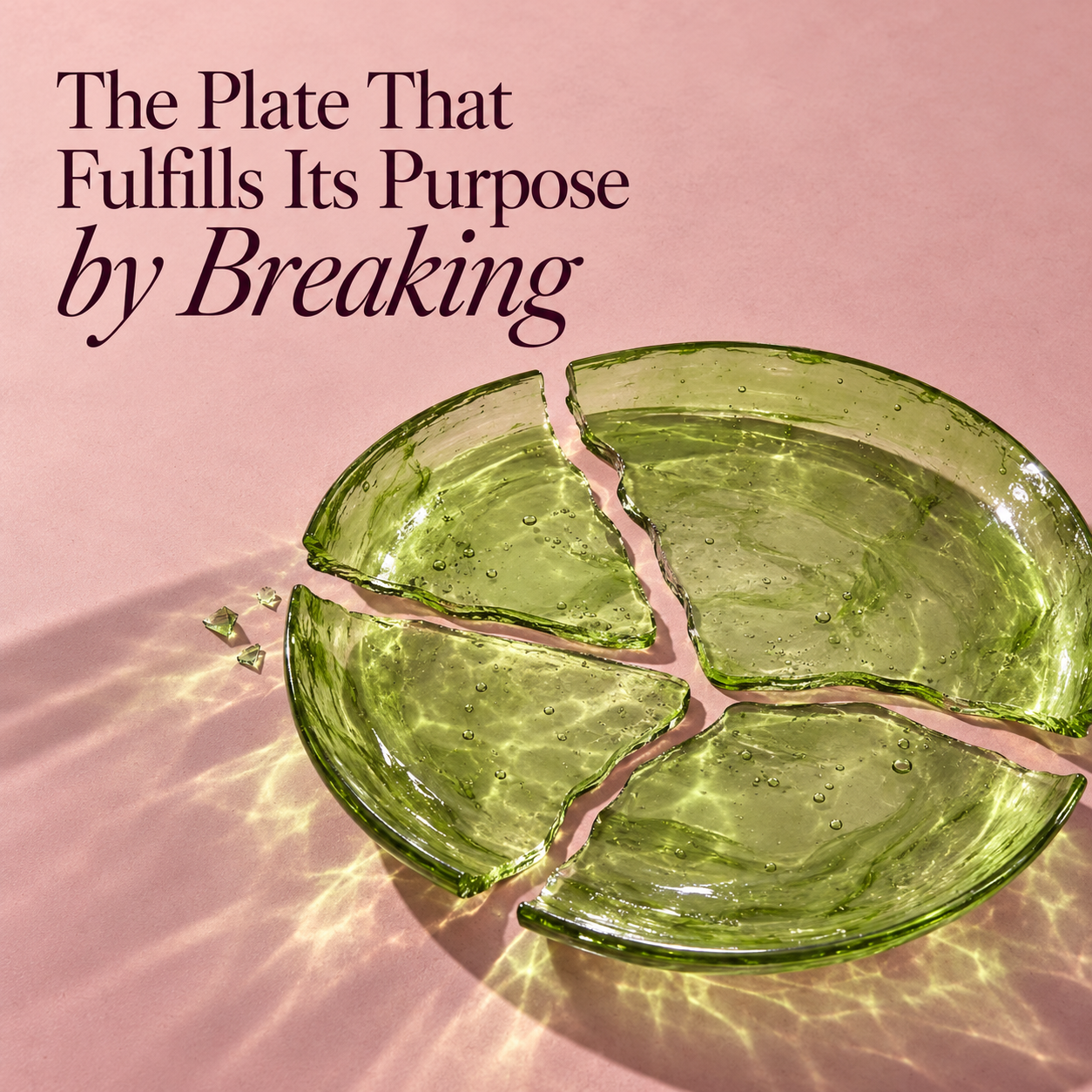
There is an image that every visitor to a certain kind of Greek taverna carries home, the floor scattered with the white shards of smashed plates, a debris of broken crockery underfoot that marks the spot where, a moment before, the joy in the room reached a pitch that could only be expressed by destruction. It is a strange and beautiful thing to witness, because everything our discipline teaches about the designed object is suddenly inverted. We spend our lives selecting, arranging, and protecting the elements of a room, and here is a culture that reaches the summit of its celebration by hurling one of the most carefully designed small objects in the home to the ground and shattering it. On this platform we publish, with great care, the images and the designs of dining room elements, the table, the chair, the glass, and above all the plate, treating each as something to be chosen well and kept. So the smashed plate is a provocation aimed directly at us, and I want to take the provocation seriously, because hidden inside that shattered crockery is a question about what the dining room is actually for, and whether we have been designing it for the right thing.
Let me first separate the image from a romantic story. Plate smashing is sometimes described as resistance against the military junta that ruled Greece from 1967 to 1974. The selected material consulted for this essay does not establish that as the general origin or meaning of the practice. Research on Greek music and dance gives us a more useful context in kefí, a heightened state of shared enjoyment, while studies of cinema and tourism show how images of Greek festivity could become marketable spectacle. Research on resistance, meanwhile, documents political organization and cultural expression that should not be collapsed into a single picturesque gesture. This distinction does not prove that no broken plate ever carried a political meaning. It means that the gesture cannot, by itself, establish one. For the architectural argument that follows, I read the shattered plate as an image of celebration and release, rather than as evidence of a universal story of defiance.
The Most Designed Small Object in the House
Consider what the plate actually is, in the economy of a home’s design. It is among the intimate, frequently handled designed objects that many of us own, a piece of deliberate design in the whole of domestic architecture that touches the human body several times a day, that holds the food we take into ourselves, that sits at the exact center of the most ritualized gathering a household performs. We lavish attention on it. The dining table is often the most considered surface in the home, the plates upon it chosen for their glaze and their weight and their relationship to the cloth and the light, and the images we publish of beautifully set tables are, in a sense, portraits of a culture’s highest domestic intentions, the room where a family or a host says, through objects, this is how we wish to receive the people we love. The plate carries an astonishing density of design meaning for so small and ordinary a thing, and precisely because of that density, its destruction carries a shock entirely out of proportion to its material worth.
And here is where the dining room reveals itself to be a stranger and more charged space than our careful photographs admit. Much of domestic design is governed by an unspoken contract of preservation. We design the living room to be kept, the facade to endure, the kitchen to last, and the whole apparatus of construction and specification exists to make objects that survive. The dining room appears to obey the same contract, the matched service, the preserved heirloom china passed down through generations, the set table arranged like a still life. But underneath that surface of preservation, the dining room is secretly a room explicitly organized around consumption, to the deliberate using up of things, and the smashed plate simply carries that logic to its visible extreme. The meal itself is an act of destruction, the beautiful arrangement of food existing only to be eaten, the perfect table set only to be disordered. The dining room is a theater of controlled destruction that we have decorated to look like a theater of preservation, and the broken plate on the taverna floor is merely the moment the mask slips and the room admits what it was always for.
Kefí, and the Object That Exists to Be Released
The concept the Greeks give us, kefí, is worth sitting with, because it names something our design culture has almost no vocabulary for. Kefí is not simply happiness or fun. It is a collectively produced state of elevated merriment, something that happens to a group rather than an individual, built up through the shared rituals of the table until it reaches an intensity that demands physical expression, and the anthropologists describe it as a profoundly social and bodily condition, experienced most fully within the group and often through gesture rather than words. The smashed plate belongs to this. It is a somatic, pre discursive gesture, an expression of excess that escapes language entirely, which is partly why it was so easily and wrongly mythologized as resistance, because its meaning is easily supplied afterward by the viewer. A gesture without words is not beyond regulation or censorship. For this essay, the more productive interpretation concerns celebration. The plate is broken because the joy has exceeded the capacity of the designed object to contain it, and the object, in that instant, fulfills its highest purpose by being destroyed.
This is the idea that genuinely unsettles me as someone who thinks about the design of interiors, because it proposes that an object can complete itself through its own destruction, that the plate hurled to the floor in a peak of collective joy has not been wasted but consummated, used for the fullest thing an object at a table can be used for. Our entire design instinct runs the other way. We design for the object to survive the moment, to be photographed intact, to be preserved and admired and kept, and we would regard its destruction as a failure of the design, a loss. The kefí tradition proposes the opposite, that the moment is more valuable than the object, that the human projects of celebration and release and togetherness are the real point, and the designed thing exists to serve them even to the point of being consumed by them. The plate that is kept forever on a shelf, never used, perfectly preserved, has in this view failed, and the plate shattered in a moment of overwhelming joy has succeeded. That is a scandalous proposition to a design culture organized entirely around preservation, and I think it is largely correct.
The Danger of Designing the Room to Be Photographed
This brings me to a danger that sits very close to home, to the very way a platform like ours, and the wider culture of interior imagery, presents the dining room. We photograph these spaces at the moment of their maximum perfection and minimum use, the table set and untouched, the plates immaculate and empty, the chairs arranged with no one in them, the whole room captured precisely before any human being has entered to disorder it. These images are beautiful and they are also, if we are honest, portraits of a room that has not yet begun to do its job. The cities of the design world are full of dining rooms that exist primarily to be photographed in this pristine state, rooms designed for the image of the meal rather than for the meal itself, and the smashed plate stands as a rebuke to all of them, because it is the mark of a room that was used so fully, so joyfully, that it could not survive the night intact.
There is a real design question buried here, and it is not sentimental. Are we designing dining rooms to be lived in or to be looked at. A room designed to be photographed optimizes for the still perfection of the untouched setting, for materials and arrangements that look best empty and undisturbed, and such a room can be subtly hostile to actual use, too precious to spill in, too composed to disorder, a space that silently asks its occupants not to live too hard in it. A room designed to be lived in optimizes for something else entirely, for the capacity to hold mess and noise and release, for surfaces that improve with use rather than degrade, for an atmosphere that gives people permission to reach kefí rather than to sit carefully within a composition. The designer who understands the smashed plate designs for the second room, and understands that the highest compliment to a dining room is not that it photographed beautifully but that something happened in it worth breaking a plate over.
Designing for Release, Not Only for Preservation
So what would it mean to take this seriously in the actual design of interiors, rather than treating it as a charming foreign custom. It would mean recognizing that the dining room is a space whose design must account for emotional release and the ungovernable human moment, alongside the many other rooms in which shared life unfolds. The bedroom is designed for rest, the study for focus, the living room for ease, but the dining room is designed for a kind of controlled excess, for the gathering of people into a heightened collective state, and a design that ignores this, that treats the dining room as merely another surface to be composed and preserved, has misunderstood the room at its root. The attention to detail that we rightly lavish on the elements of the table, the glaze of the plate, the weight of the glass, the fall of the cloth, should be attention in service of the moment those elements will host, not attention that makes the moment feel forbidden. The most sophisticated architectural research into domestic space keeps rediscovering that rooms succeed or fail by the behavior they permit, not by the image they present, and nowhere is this truer than in the room built for the feast.
None of this is an argument for literal destruction, and I am not suggesting we design dining rooms to be smashed. The Greek practice was a specific cultural form, and it became, by its own history, a commercialized spectacle and later a kind of kitsch, and to import it literally would be exactly the shallow mistake the research warns against. The point is deeper than the gesture. The smashed plate is a key that unlocks the true nature of the dining room, revealing it as the home’s theater of release rather than its gallery of preservation, and once that lock is turned a great deal of our design thinking has to be reconsidered. We have been designing the most emotionally charged room in the house as though it were the most static, composing it for the photograph when we should be composing it for the kefí, lavishing our detail on the preservation of objects when the objects exist to serve a human intensity that may, at its peak, consume them. The news of interior design and the glossy competitions that reward the perfect untouched setting will keep training us to see the dining room as a still life, and the shattered crockery on the taverna floor will keep insisting that we have it backward.
Here, then, is the thesis I did not expect to reach from a swept pile of broken plates. The designed object at the table does not exist to be preserved. It exists to serve the moment, and the moment, at its fullest, is worth more than the object. A dining room, and every element in it that we so carefully design and so lovingly photograph, is successful not when it survives the evening immaculate but when it gives the people within it permission to reach a joy large enough to be careless, and its social durability depends on how fully its objects are used in the service of human connection. That is distinct from environmental sustainability: the image of breakage does not demonstrate a material or carbon benefit, and this essay does not propose deliberate waste. We are right to lavish our attention on the plate, on its glaze and its weight and its place in the composition of the table. We are wrong if we lavish that attention in order to keep the plate safe. We should lavish it in order to make the plate worthy of the moment that may, in the end, break it, because a plate shattered in genuine joy has done something no plate on a shelf has ever done, it has been fully, completely, and triumphantly used, and that, not its preservation, is the highest purpose a designed object at a human table can serve.
✦ ArchUp Editorial Insight
The essay’s governing move is to question a romantic myth before building on it. Its distinction between political resistance and the affective world of kefí is useful precisely when it remains a distinction, rather than becoming a claim that every festive gesture has one fixed meaning. The selected evidence does not establish plate smashing as a general practice of resistance against the junta. It supports a more careful reading of celebration, representation and the ways Greek festivity could be staged for an audience. That refusal of the flattering narrative returns the gesture to a register from which the essay develops its architectural claim: the dining room is a theater of consumption decorated to look like a theater of preservation, and the meal itself, the arranged food existing only to be eaten, the set table only to be disordered, already obeys the logic the smashed plate carries to its visible extreme.
The sharpest contribution is the design indictment that follows. Interior imagery photographs these rooms at the moment of maximum perfection and minimum use, the table set and untouched before anyone has entered to disorder it. The published portrait can therefore be of a room that has not yet begun to do its job. This is the same gap between the opening day photograph and inhabited life traced in The Shoeshine Problem and Brain Rot in the Rabbit Hole, where an image optimized for the scroll can displace the thing it was supposed to represent.
The essay’s deepest design proposition is that rooms succeed or fail through the behavior they permit as well as the image they present. A space optimized for an untouched setting can turn subtly hostile to actual use, too precious to spill in and silently asking its occupants not to live too hard in it. This connects to The Value Is in the Verb, Not the Noun: value lives in the act served, not simply in the object preserved. With its explicit refusal to import the literal gesture, the essay asks why a room charged with human emotion is so often designed as a static composition. Its argument concerns permission to use a room fully. It does not make broken glass a design requirement or destruction an environmental virtue.
Ibrahim Fawakherji, ArchUp
Reading Note
This essay develops an architectural interpretation from selected cultural research and the references supplied with the original text. Bibliographic checks and reading of abstracts and accessible extracts do not constitute a full reading of every work listed. The conclusions about dining room design are the author’s interpretation. The sources do not establish one universal origin or political meaning for plate smashing.
Sources
- Asimakoulas D. Translating self and others: waves of protest under the Greek Junta. The Sixties, 2009.
- Papadogiannis N. A Transnational Emotional Community? Greek Political Songs and the Politicisation of Greek Migrants in West Germany. Contemporary European History, 2014.
- Loutzaki I. Folk Dance in Political Rhythms. Yearbook for Traditional Music, 2001.
- Basea E. Zorba the Greek, Sixties exotica and a new cinema in Hollywood and Greece. Studies in European Cinema, 2015.
- Papadimitriou L. Traveling on Screen: Tourism and the Greek Film Musical. Journal of Modern Greek Studies, 2000.
- Nikolakakis M. Representations and social practices of alternative tourists in post war Greece to the end of the Greek military Junta. Journal of Tourism History, 2015.
- Kourniakti J. From Fascist Overload to Unbearable Lightness: Recollections of the Military Junta as Kitsch in Postdictatorial Greece. Journal of Modern Greek Studies, 2017.
- Kallimopoulou E, Kornetis K. Magical Liturgy: A History of Sound at the Kyttaro Music Club, 1970 to 1974. Journal of Modern Greek Studies, 2017.
- Kornetis K. Cultural Resistances in Post Authoritarian Greece. Journal of Contemporary History, 2021.
- Veremis T. The Greek military dictatorship: Revisiting a troubled past 1967 to 1974. Southeast European and Black Sea Studies, 2024.
- Sotiropoulos DA. Review of Children of the dictatorship: student resistance, cultural politics, and the long 1960s in Greece. Southeast European and Black Sea Studies, 2016.
- Tsounis D. Kefi and Meraki in Rebetika Music of Adelaide: Cultural Constructions of Passion and Expression and Their Link with the Homeland. Yearbook for Traditional Music, 27, 1995, pp. 90–103.