UNS Completes Renovation of Valkhof Museum in Nijmegen

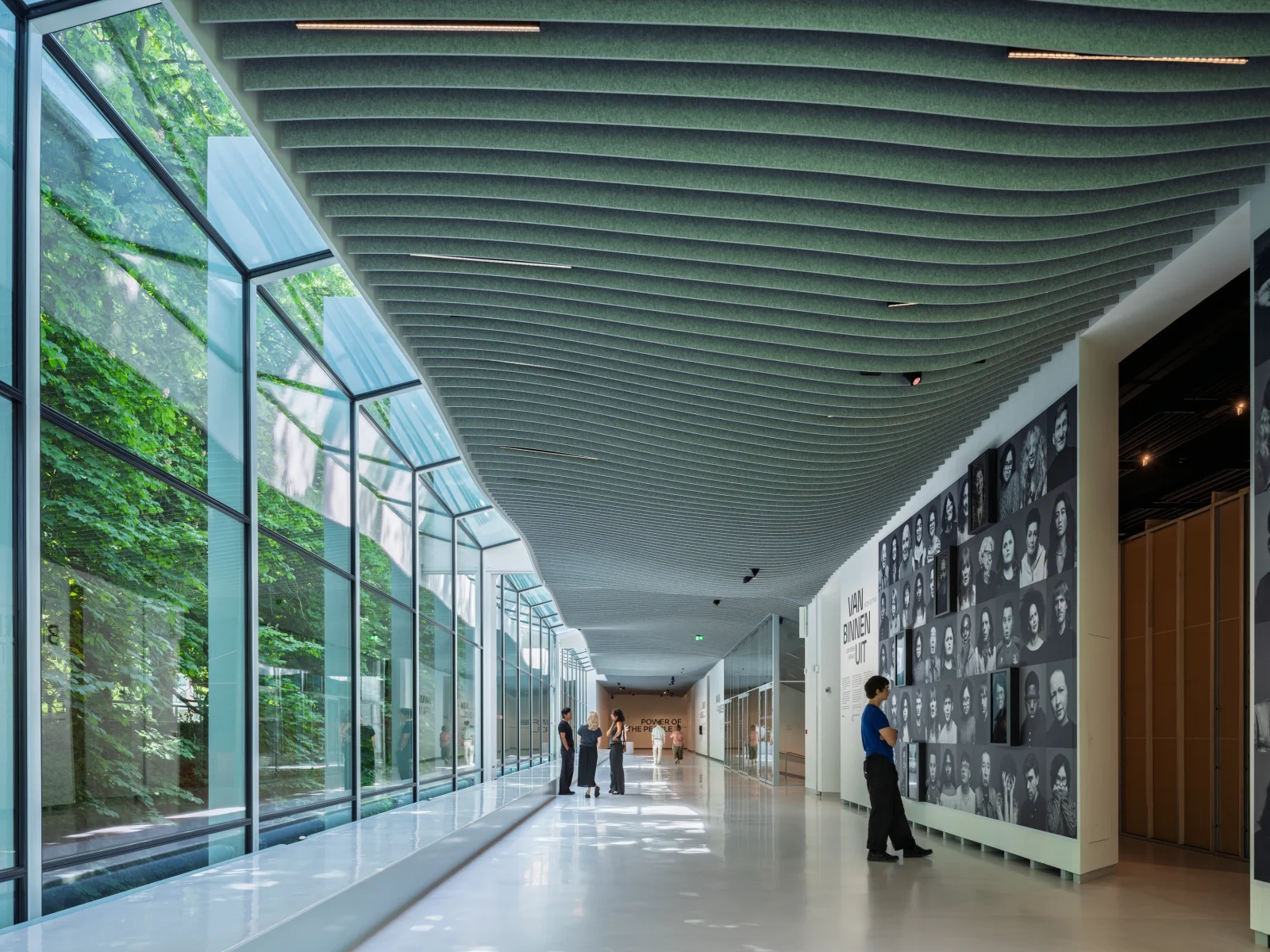
The Valkhof Museum in Nijmegen reopened to the public on June 6, 2026, following an extensive architecture renovation led by UNS. The Dutch practice revisited its original 1995 design to adapt the cultural institution for contemporary requirements while refining its core spatial character.
The project focused on the museum’s role as a civic anchor for archaeology, history, and art. The design team prioritized the retention of signature elements, including the central staircase and the undulating ceiling, while upgrading the building’s environmental performance and news circulation systems. Strategic interventions now provide greater spatial clarity across the facility’s three levels.
Internal Reorganization Improves Visitor Sequence
The renovation introduces a new organizational logic to the museum’s program. The permanent collection now occupies the basement level, while the upper floor accommodates temporary exhibitions. This arrangement creates a continuous movement loop, allowing visitors to glimpse collection storage areas during their journey through the galleries.
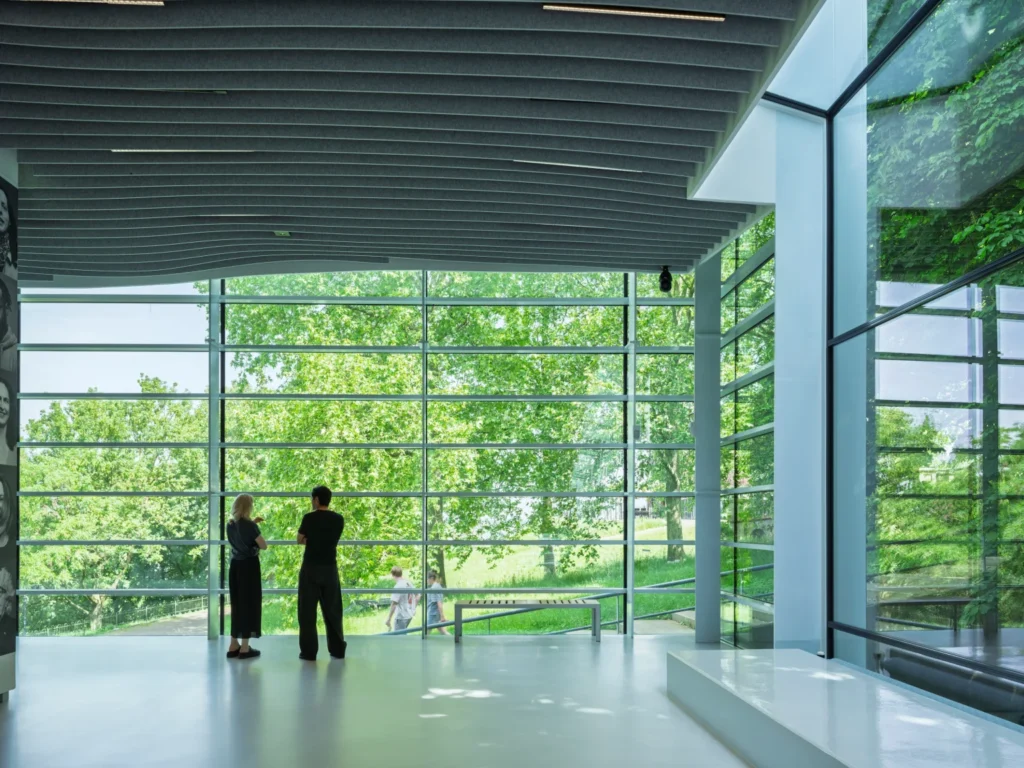
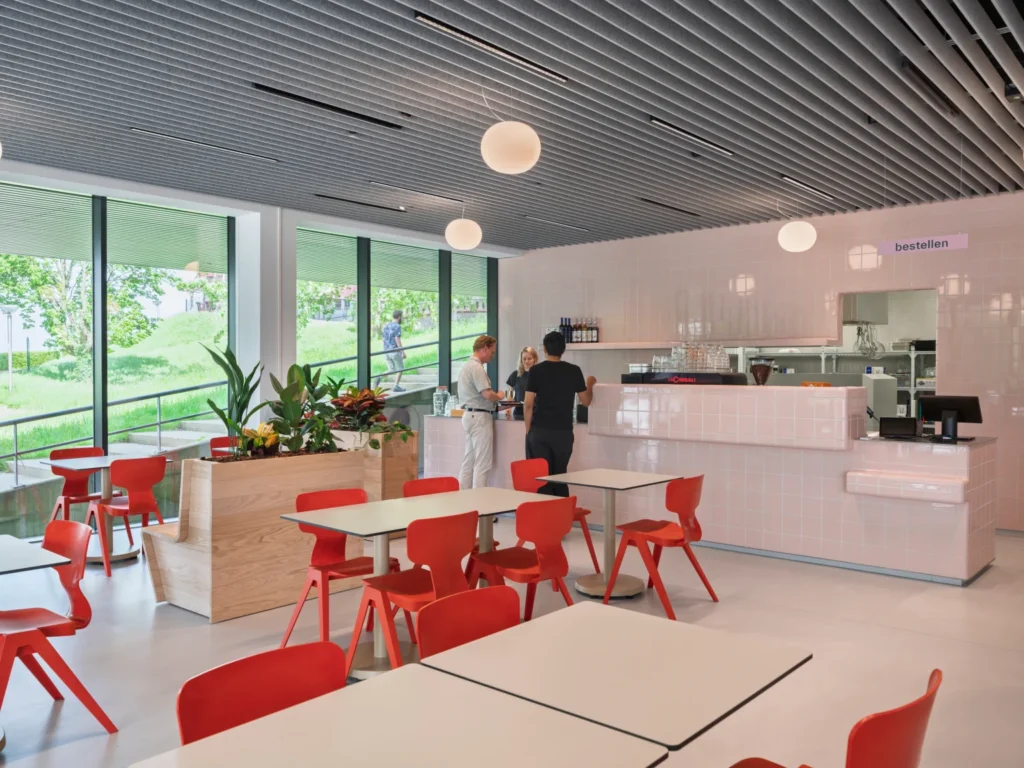
On the ground floor, the design team relocated the café from the rear to the front of the building. This shift connects the interior directly to a new outdoor terrace and the adjacent public square. Newly created educational facilities and an auditorium occupy the rear section, facilitating multiple simultaneous functions within the museum footprint.
“Returning to a building you designed 30 years ago is an incredible experience for an architect. You have to be honest about what worked, decisive about what needs to be updated, and disciplined enough not to simply replace the familiar with the new.”
Ben van Berkel, Founder and Principal Architect of UNS
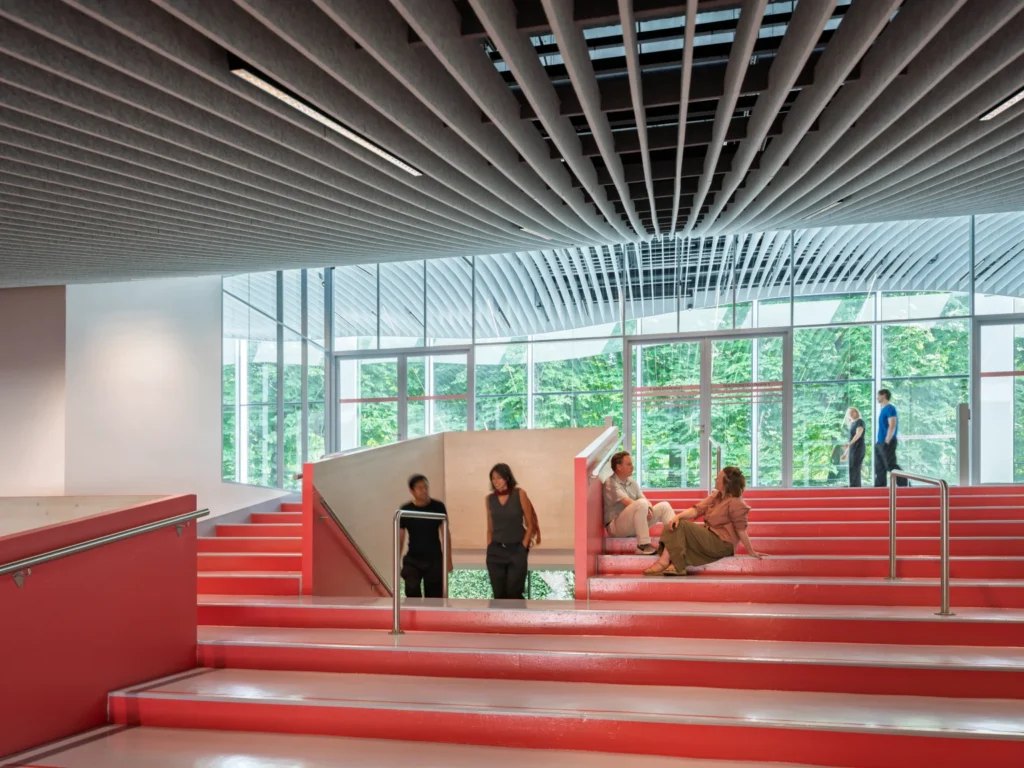
Enhanced Transparency and Technical Upgrades
Two new floor openings enhance daylight penetration and internal visibility. At the rear, an aperture links the ground floor to the basement, illuminating lower-level galleries. A second opening provides views into the restoration workshop from the museum shop, revealing behind-the-scenes conservation work to the public.
The team achieved sustainability goals by retaining the original facade structure. Contractors dismantled the envelope to replace insulation with high-performance building materials before reinstalling the existing glass panels. This method significantly reduced waste while improving the thermal envelope of the institution.
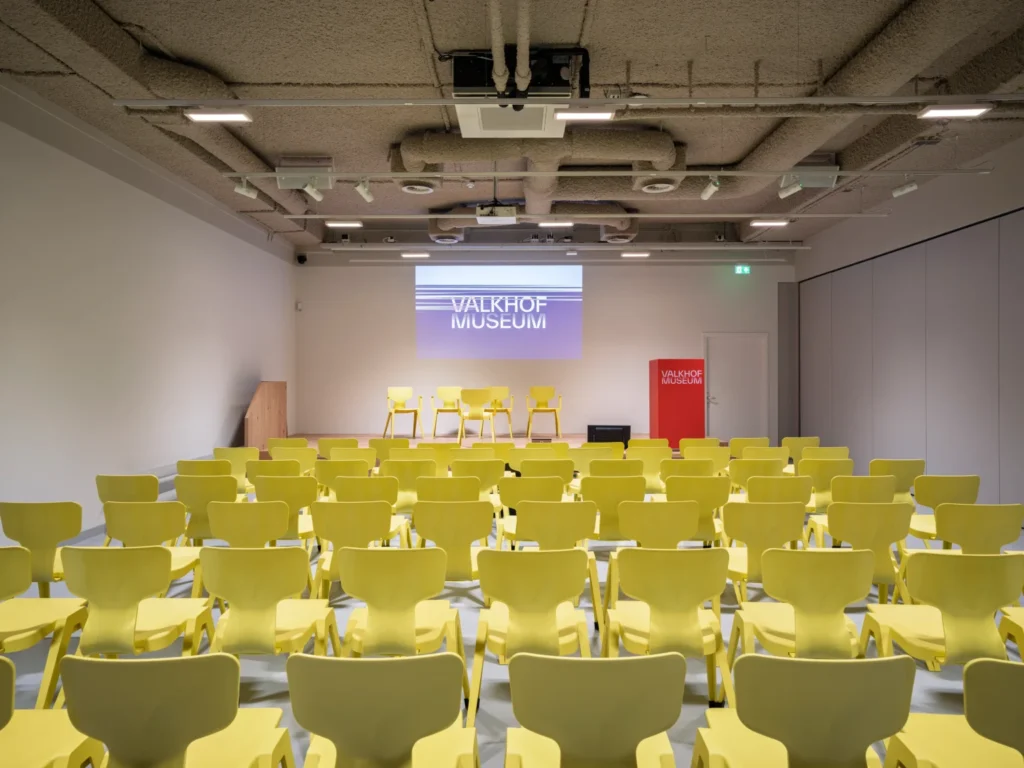
Interior finishes also underwent technical refinement. A new acoustic system utilizing PET felt lamellas replaces the original rippling ceiling, simplifying maintenance and improving sound quality. In several areas, the removal of suspended ceilings reveals the full volume of the gallery spaces, reducing the overall material load of the interior.
Integrated Design and Civic Connection
The renovation incorporates a unified visual identity across the interior design and branding. Collaborators Ineke Hans and Thonik developed furniture and graphics that reference the museum’s architectural geometry. These elements use a vibrant color palette and circular forms to create a cohesive visitor experience across all touchpoints.
✦ ArchUp Editorial Insight
The renovation of the Valkhof Museum demonstrates a sophisticated model of architectural self-critique. By returning to a site thirty years after its completion, UNS avoids the temptation of wholesale demolition, instead choosing targeted surgical interventions. The project succeeds by identifying circulation bottlenecks and thermal inefficiencies in the original 1998 structure. The relocation of the café and the introduction of transparency between conservation labs and the public realm modernize the museum’s operational logic. This approach treats the existing building as a durable resource, proving that institutional longevity relies more on spatial flexibility and material upgrades than on formal reinvention.
Project Team: UNS (Architect), Ben van Berkel (Lead Architect), Ineke Hans (Interior Design), Thonik (Graphics), Opera (Exhibition Design), ABT (Structure/Acoustics), Nelissen (Climate). Location: Nijmegen, Netherlands.
Project Notes: Completed renovation of 1998 building. Public reopening occurred June 6, 2026. The Municipality of Nijmegen served as the client while Berghege acted as the contractor.