Tokimeki Fruit-Shaped Bus Stops: Form and Function

The Experience of Passage and Mass Formation
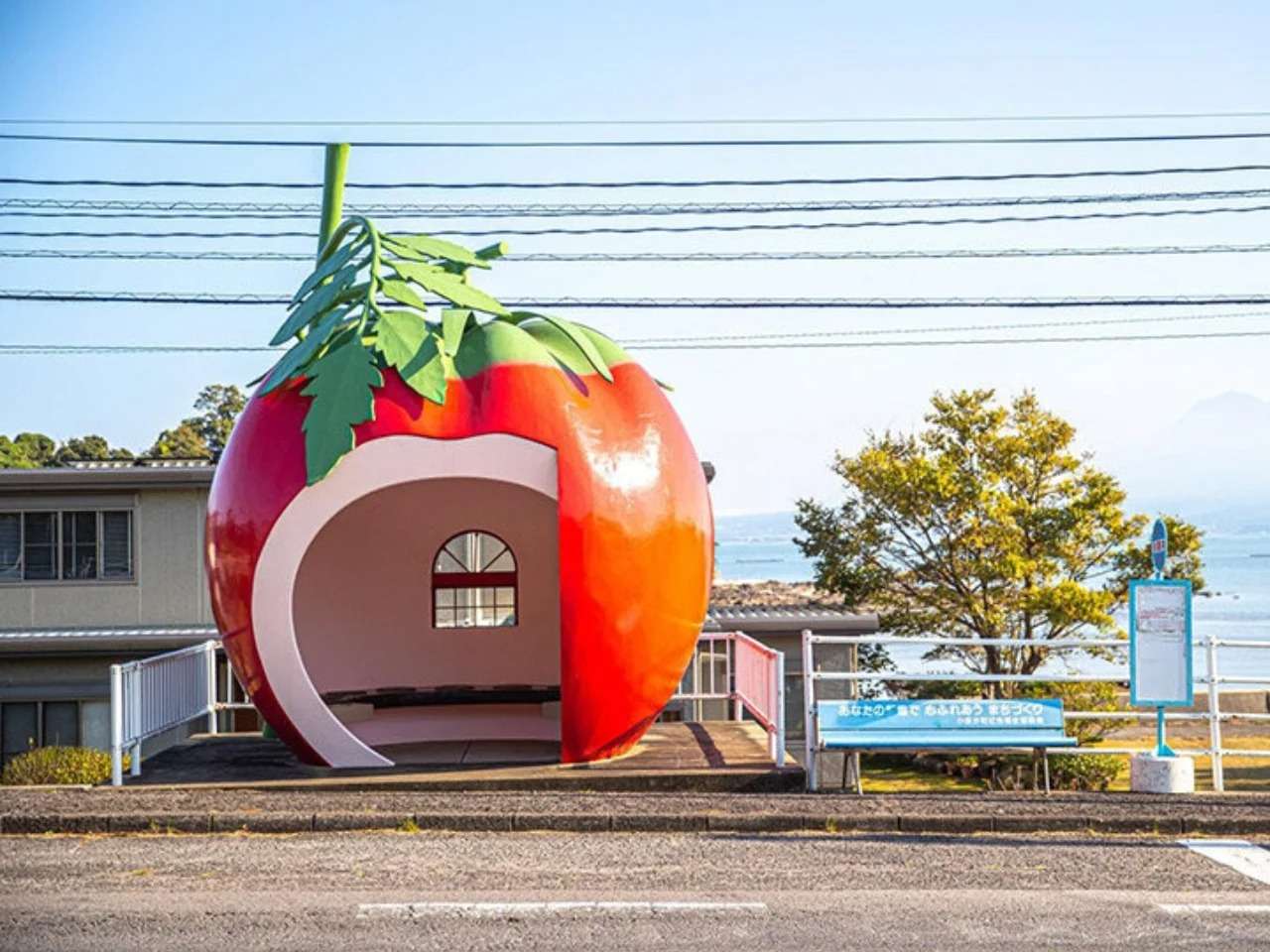
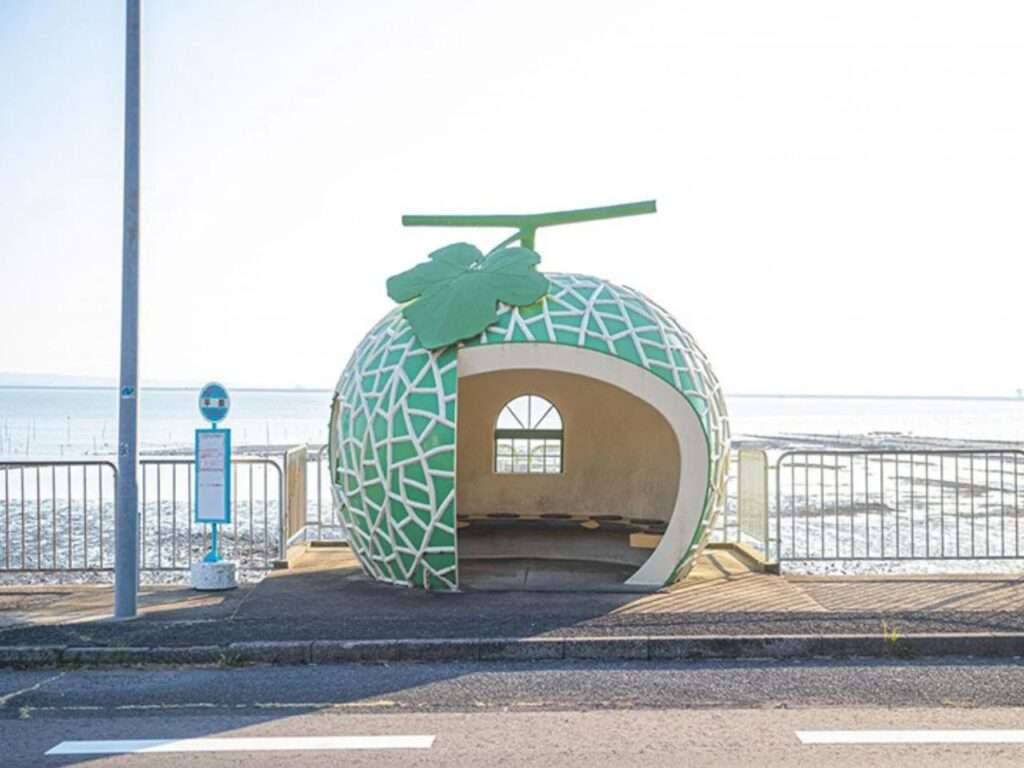
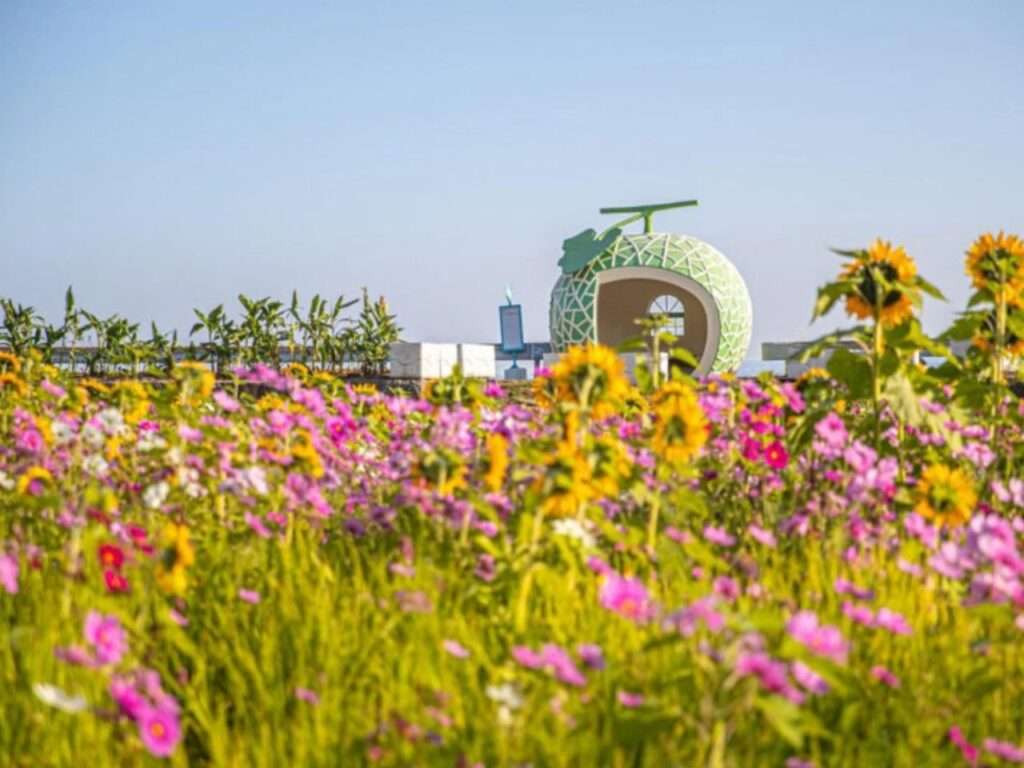
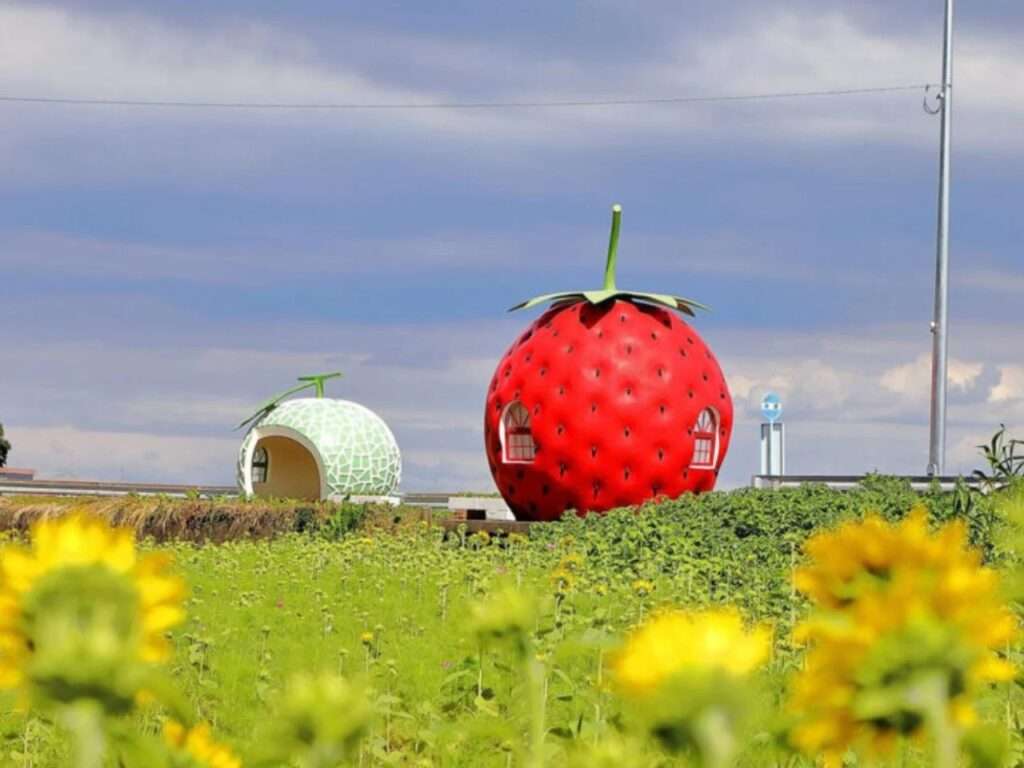
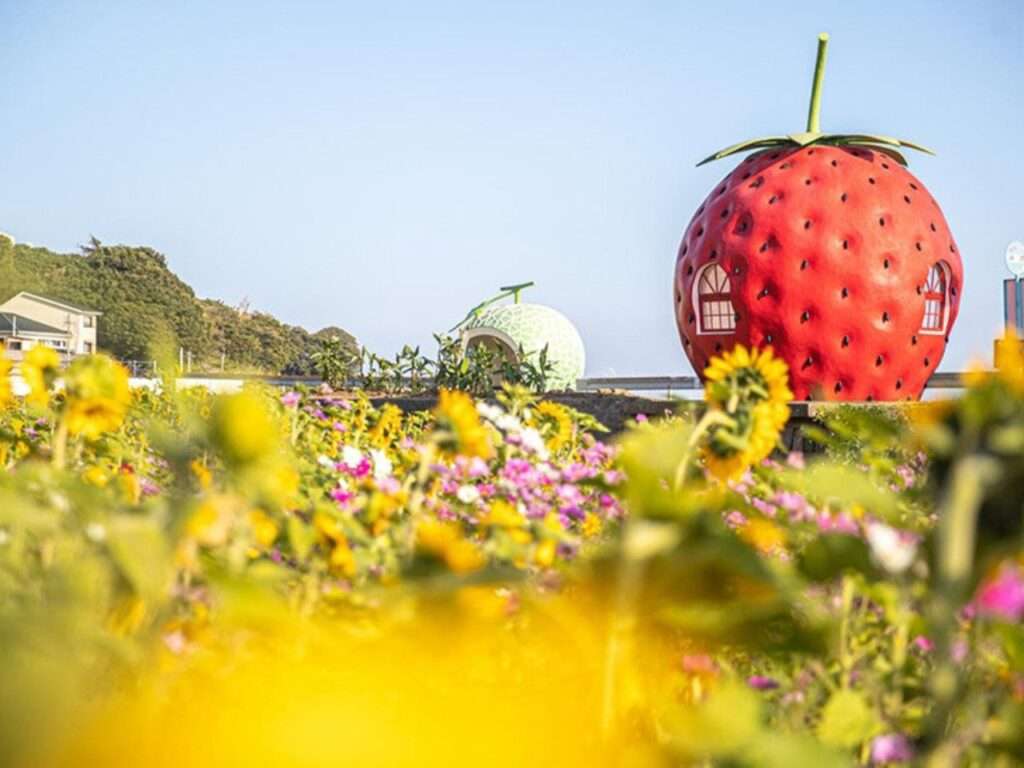
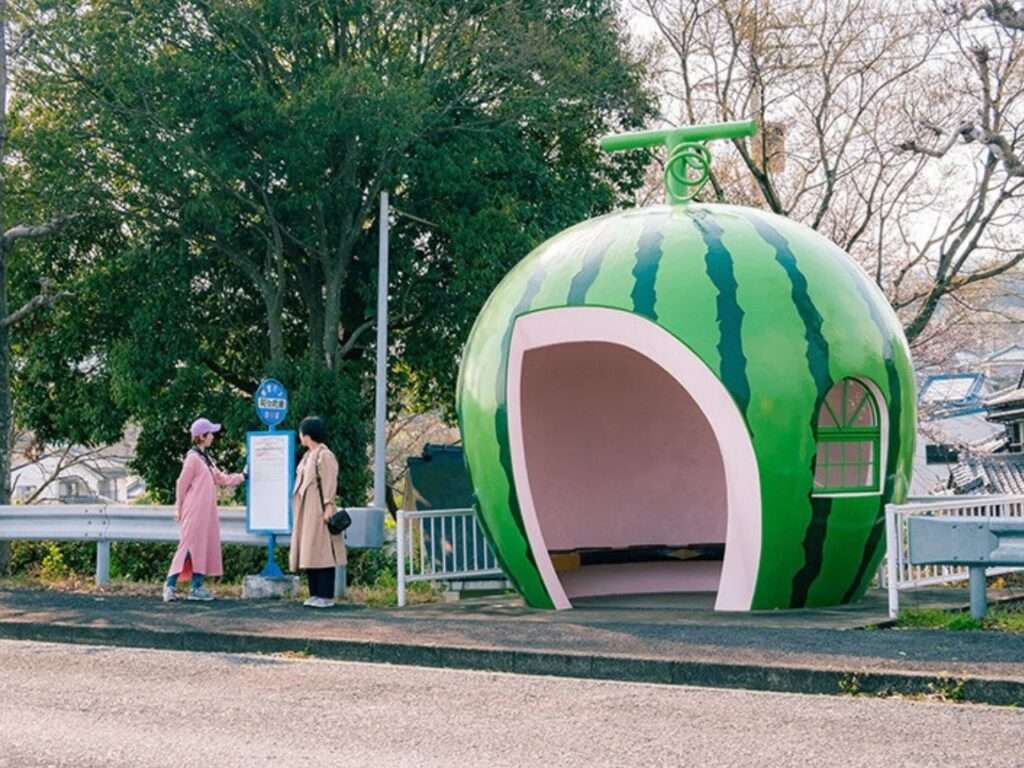
The 16 bus stops distributed along Route 207 in Konagai, Nagasaki Prefecture, take on an unconventional form compared with traditional transportation infrastructure. The stops are shaped as fruits, including watermelons, melons, tomatoes, mandarins, and strawberries, appearing as hollow volumes with a distinct visual presence along the road. According to available sources, the development of these configurations was associated with design entities including Yoshitsugu Industries and Time Design Office, while the stops have simultaneously retained their primary function as waiting shelters that protect users from the rain.
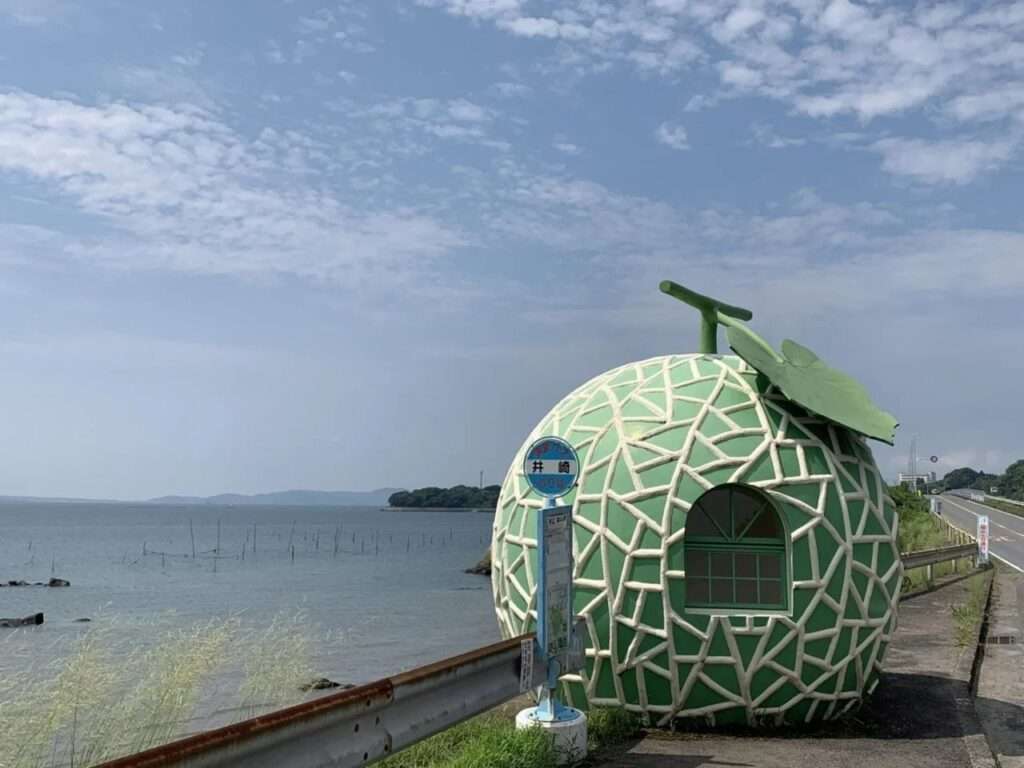
The strength of the composition lies in the relationship between the outer shell and the interior void. Each stop is perceived from a distance as a sculptural volume, while approaching it reveals a cavity intended to accommodate the user. Details inspired by the characteristics of the fruits, such as the pronounced netting on the melon surface or the distinctive treatment of the tomato’s skin, give each volume its own visual identity, making variations in texture part of the process of distinguishing the stops along the route.
Visual Dynamism and the Relationship Between the Stops and the Road
The project’s name, Tokimeki Fruit-Shaped Bus Stop Avenue, is associated with the concept of “Tokimeki,” referring to a sense of fluttering or excitement. This idea corresponds with the way the stops appear within the everyday landscape of the road. Their unconventional forms and fruit-inspired colors create a sequence of visual points amid the road’s linear extension, giving the service infrastructure a presence that can be perceived quickly while in motion.
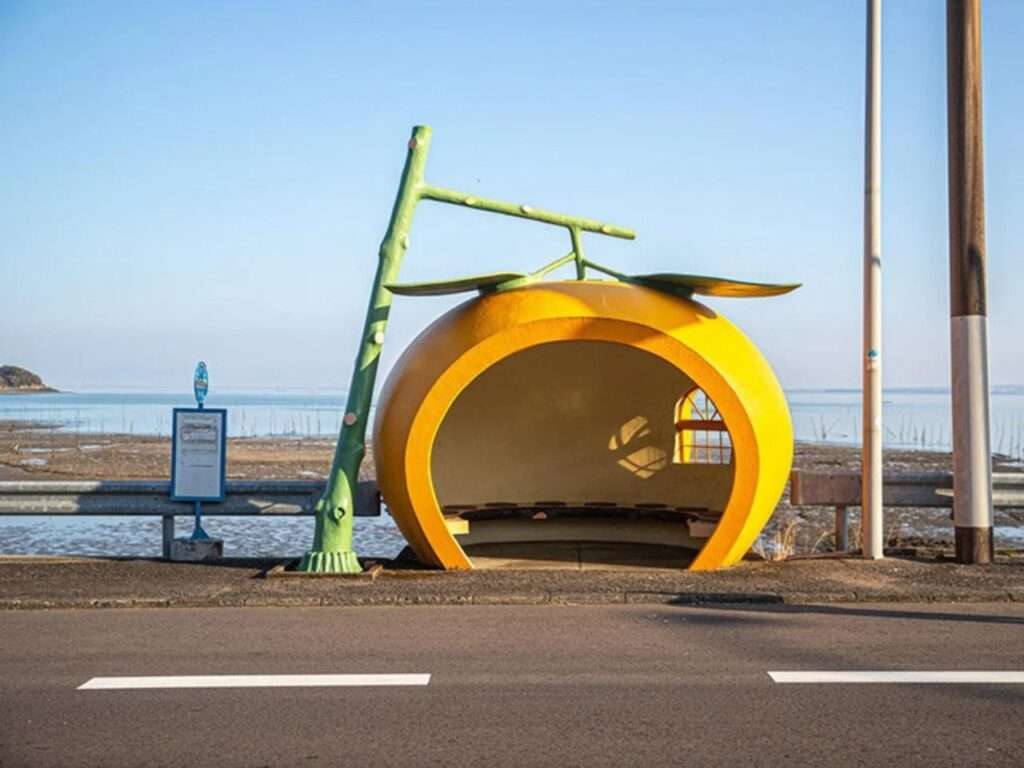
The stops do not rely solely on their external forms; the interior cavity plays an essential role in shaping the experience. As one moves from the road into the volume, perception shifts from observing the complete form to engaging with its inner surface, the edges of the openings, and the shadow. In this way, the design combines two complementary readings: a distant reading based on the overall image, color, and form, and a close reading that reveals the texture, the scale of the cavity, and its relationship to the user’s body.
Historical Dimensions and Structural Formation
The stops date from 1989 and 1990 and were associated with events held as part of the Nagasaki Journey Expo 1990. The project was based on transforming fruit forms into architectural configurations with a distinct presence, rather than simply applying decorative symbols to conventional bus shelters.
The construction method reveals the importance of the material dimension in achieving these forms. A metal mesh framework combined with cement mortar was used to create the shell surrounding the void, while details associated with each fruit, including stems and leaves, were incorporated into the overall composition. This method makes it possible to transform a nature-inspired form into a genuine architectural enclosure that retains a usable interior space rather than functioning merely as a visual element detached from its purpose.
Material Treatment and Variation in Scale
The project’s specificity is also evident in the varying treatment of surfaces from one fruit to another. The surface netting of the melon, for example, was formed at a pronounced scale that makes it legible from a distance, an aspect related to the site conditions in which the stops are viewed from passing vehicles on the road. At the strawberry stops, fine surface details were added, including seeds individually fixed using mortar, reinforcing the resemblance between the architectural volume and the fruit that inspired it.
This produces a gradual sequence of perception that begins with the overall image of the stop as seen from the road, moves toward the details of its surface as one approaches, and finally reaches the interior space during use. Not all of these details carry the same functional importance; some facilitate visual recognition of the form, while others contribute to the formation of texture and enrich the reading of the volume at close range. In this way, the project combines formal clarity at the scale of the overall landscape with precision in the treatment of details.
The Spatial Transformation of Urban Furniture
The continued functioning of these stops since their construction in the late 1980s demonstrates how everyday infrastructure can retain a visual presence that extends beyond its immediate function. Rather than disappearing into the urban landscape, the bus shelters appear here as distinct elements that can be identified from a considerable distance through their volumes, colors, and fruit-inspired forms. Yet this presence does not come at the expense of functionality; the structures remain effective shelters for waiting passengers, combining usability with a clear architectural image.
From this perspective, the stops can be understood as a distinct form of urban furniture, in which visual value is not added to the element after its completion, but rather in which function and form are conceived from the outset as part of a single composition. This integration gives the road a sequence of successive architectural markers, making the bus stop a legible component of the landscape rather than merely a neutral service point.
Architectural Embodiment of Identity and Place
The forms of the stops are directly connected to the agricultural landscape of Konagai, transforming familiar fruits into a clear formal language that can be recognized immediately. This relationship is evident both in the selection of the forms themselves and in the details that emulate the characteristics of each fruit, from the netted surface of the melon to the details of the strawberry, tomato, and others. Thus, the identity of the stops does not depend solely on additional materials or ornamentation; it is embodied in the architectural form of the volumes themselves.
This choice establishes a direct relationship between function and place. The stop serves its role as an element of the transportation system while simultaneously evoking a feature associated with the local environment through its form. This strategy can be understood as a means of introducing a sense of spatial specificity into a repetitive service infrastructure, whereby the variation among the stops becomes part of the reading of the road rather than relying on a single repeated model for every stopping point.
Infrastructure as Part of the Public Realm
The Konagai bus stops reveal another dimension of small-scale infrastructure design: a service element does not necessarily need to remain visually neutral in order to perform its function effectively. Here, the waiting points are conceived as objects with a distinct formal character, making them legible within the broader landscape even before they are used.
The significance of the experiment lies in this intersection between the small scale and the broader extension of the road. Each stop occupies a limited area, yet contributes to shaping the image of the road through the sequence of different forms distributed along it. In this way, urban furniture becomes a tool for organizing the visual perception of the landscape without the need to transform it into a large structure or an independent urban element.
From the Exterior Landscape to the Interior Space
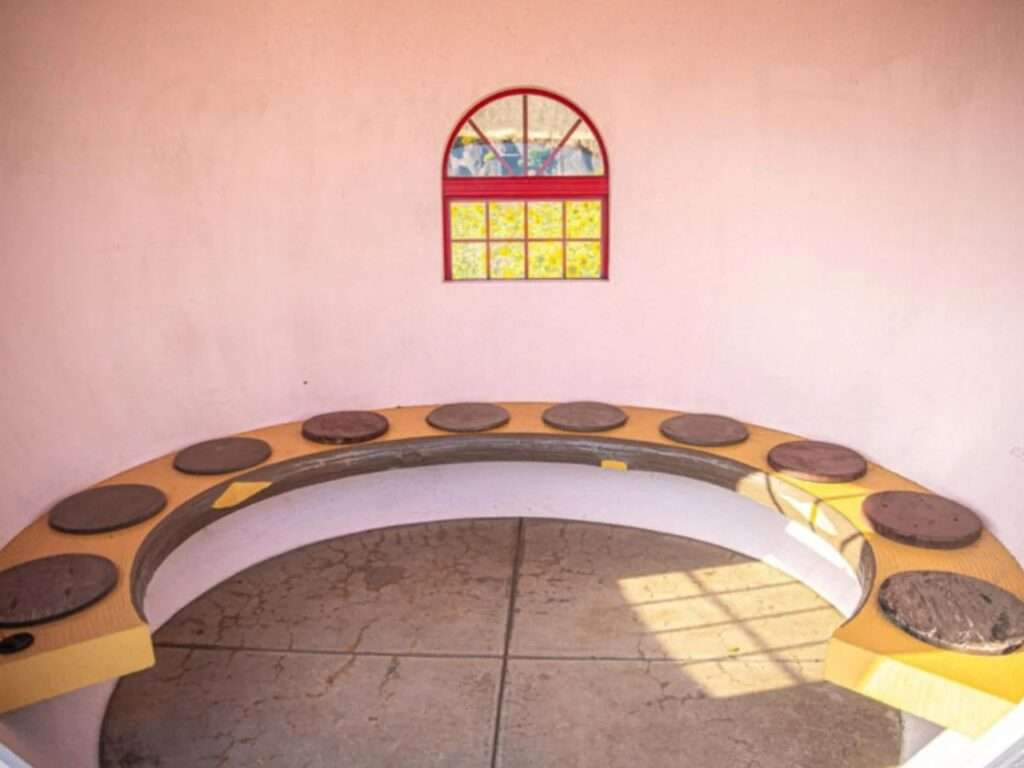
The reading of the stops is completed when moving from viewing them as volumes from the road to using them from within. The opening in each fruit reveals a space intended for waiting, transforming the outer shell from a mere image into an enclosure that performs a protective function. Variations in the size of the openings, the shape of the shell, and the surface details consequently become part of the way users experience each stop.
This transition also reveals a difference in scale between observation and use. From the outside, the stop is perceived as a large fruit forming a clear landmark along the road, while from within, the user experiences it as a confined space surrounding the body and protecting it from the rain. Here, the overall image intersects with the immediate function, as the distinctive form of the stops is not separate from the purpose for which they were created; rather, the form itself is used to construct the shelter.
✦ ArchUp Editorial Insight
The bus stops in Konagai reframe small-scale infrastructure as a distributed system of spatial markers. The fruit-inspired volumes compress shelter, local agricultural identity, material execution, and recognizability along the road into a single enclosure. Rather than treating infrastructure as a neutral background, the project makes repetition visually legible, allowing the sequence of small structures to organize the road as a continuous architectural landscape. Their continued use also demonstrates the possibility of combining formal specificity with basic utility.
Yet this reading may overstate symbolism as a value in itself. The fruit-like forms enhance recognizability, but they also introduce more complex surfaces to maintain, specialized construction requirements, and a specific representational language into shelters that are fundamentally simple. Their relationship to contemporary cities therefore remains ambiguous: visual identity may strengthen the perception of place, but it may also consume resources that could otherwise be directed toward accessibility, durability, climatic performance, and adaptability. The significance of the project lies in revealing this tension rather than simply presenting an unconventional form.